
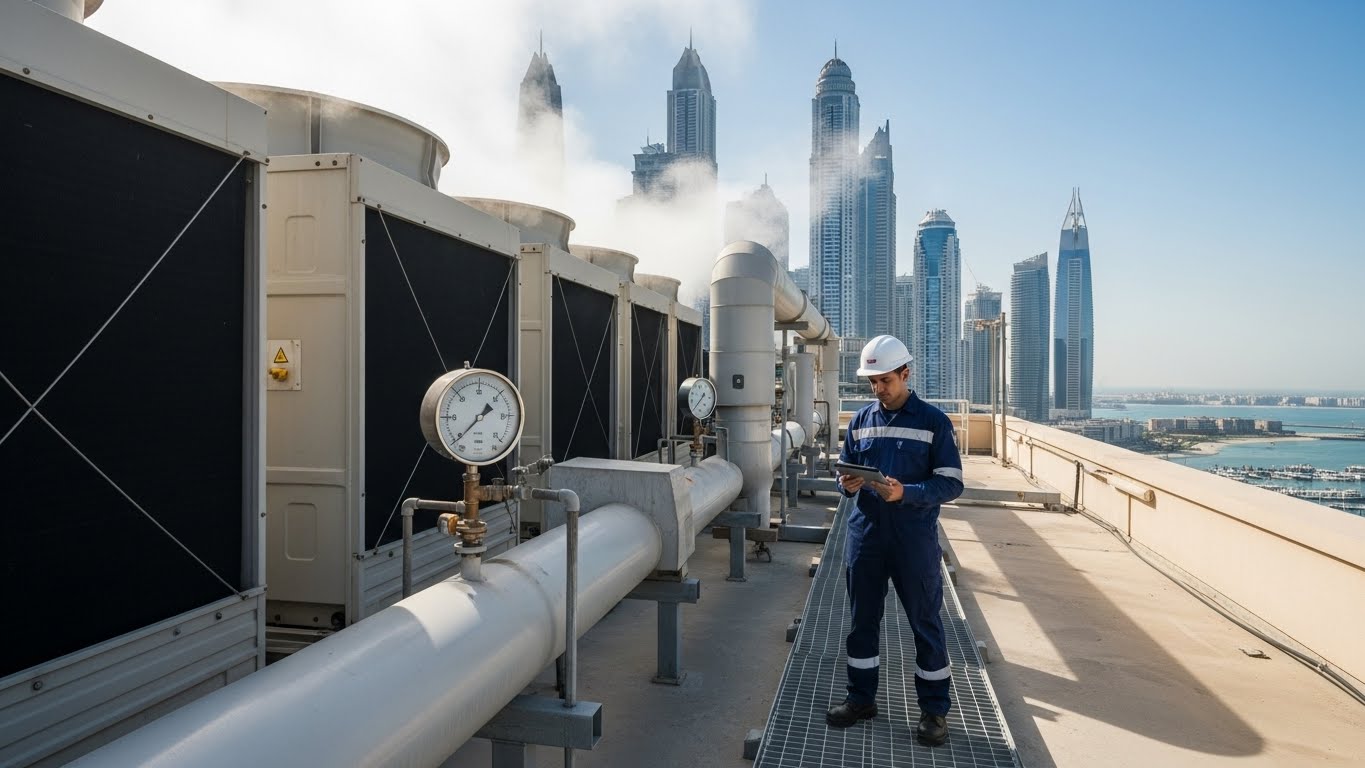
You’ve likely never given much thought to the massive cooling towers dotting Dubai’s skyline. Yet these structures are working overtime to keep your building comfortable in 45°C heat. The science behind them isn’t complicated, but the challenges they face in this desert climate are unique. Understanding how your chiller system rejects heat could save you thousands in energy costs—and prevent a costly breakdown when you need cooling most.
Key Takeaways
- Chillers cool water that circulates through air handling units, where warm air passes over cold coils to cool buildings.
- Cooling towers reject absorbed heat to the atmosphere through evaporation, with fill media maximizing water surface area for efficiency.
- Dubai’s extreme heat reduces the temperature differential between water and air, limiting heat rejection capacity and forcing chillers to work harder.
- Low humidity in desert climates increases evaporation rates, making cooling towers effective but requiring careful water conservation strategies.
- Regular maintenance including coil cleaning, water treatment, and refrigerant checks ensures optimal system performance in harsh desert conditions.
The Science Behind Chiller-Based Air Conditioning Systems
When you’re trying to comprehend how chiller-based AC systems function, it helps to commence with the fundamental principle driving the entire process: heat transfer. These systems exploit thermodynamic principles to relocate thermal energy from inside your building to the outside environment.
Here’s what happens: a chiller unit cools water or a water-glycol mixture, which then circulates through your building’s air handling units. As warm indoor air passes over cold coils, heat transfers to the chilled water, cooling your space.
The refrigerant cycles within the chiller make this possible. The refrigerant absorbs heat as it evaporates, then releases that heat when it’s compressed and condensed. You’re fundamentally using physics to pump heat out of your building rather than generating cold air directly.
Cooling Tower Components and Their Functions in Desert Climates
That heat your chiller system removes has to go somewhere, and in most large-scale installations, cooling towers handle this critical job. These towers consist of several essential components: fill media that maximizes water surface area, distribution basins that spread water evenly, drift eliminators that capture water droplets, and powerful fans that drive airflow.
In Dubai’s desert climate, you’ll face unique challenges. High ambient temperatures and low humidity dramatically increase evaporation rates, meaning your system loses water faster than in temperate regions. You’ll need sturdy makeup water systems to compensate.
The tower’s design must also account for local air circulation patterns, including sand-laden winds that can clog intake screens. Regular maintenance becomes essential for protecting heat exchange efficiency.
How Dubai’s Extreme Heat Affects Cooling Tower Performance
Because Dubai’s summer temperatures routinely soar above 45°C, your cooling tower’s performance takes a significant hit precisely when you need it most. High ambient temperatures reduce the temperature differential between your condenser water and the surrounding air, which directly limits heat rejection capacity.
You’ll face significant evaporative cooling challenges during peak summer months. When the wet-bulb temperature rises, your tower can’t cool water as effectively through evaporation. This forces your chiller to work harder, consuming more energy while providing less cooling.
The consequences compound quickly. Your system’s efficiency drops by 2-4% for every degree the condenser water temperature rises above design conditions. You’ll need to account for these performance penalties when sizing equipment for Dubai’s demanding climate.
Water Conservation Strategies for Cooling Towers in the UAE
Given these efficiency challenges in extreme heat, you’ll also face another pressing concern: water consumption. Cooling towers lose significant water through evaporation, drift, and blowdown cycles. In the UAE’s arid climate, this creates both operational costs and sustainability issues.
You can implement water recycling techniques to capture and reuse blowdown water for grounds, garden, or other non-potable applications. Some facilities treat this water through reverse osmosis systems for reintroduction into the cooling loop.
Continuous water quality monitoring helps you optimize blowdown frequency, reducing unnecessary water discharge. By tracking conductivity, pH levels, and biological content, you’ll maintain tower efficiency while minimizing waste.
Consider installing drift eliminators and adjusting cycles of concentration to maximize water retention without compromising system performance.
Maintenance Best Practices for Optimal Cooling Efficiency
While water conservation protects your resources, proper maintenance guarantees your chiller system provides ideal performance throughout its lifespan. You’ll need to establish preventive maintenance schedules that address Dubai’s unique environmental challenges, including sand infiltration and extreme heat exposure.
Inspect condenser coils monthly and clean them to prevent scale buildup that reduces heat transfer efficiency. Your chemical treatment regimens should control biological growth, corrosion, and mineral deposits within the cooling tower water. Test water quality weekly and adjust treatments based on results.
Check refrigerant levels, lubricate moving parts, and calibrate controls quarterly. Replace filters regularly and monitor compressor performance indicators. Document all maintenance activities to track system health trends. These practices extend equipment life while maintaining peak cooling efficiency year-round.
Frequently Asked Questions
How Much Does It Cost to Install a Chiller-Based AC System in Dubai?
You’ll typically pay between AED 50,000 to AED 500,000+ for a chiller-based AC system in Dubai, depending on capacity and building size. Don’t forget to factor in ongoing maintenance costs and energy consumption expenses.
What Is the Average Lifespan of Cooling Towers in UAE Buildings?
You can expect cooling towers in UAE buildings to last 15-25 years. You’ll extend this lifespan by following routine maintenance requirements and addressing seasonal efficiency variations that occur during Dubai’s extreme summer months.
Are Chiller Systems More Energy-Efficient Than Traditional Split AC Units?
Yes, chiller systems offer greater energy savings potential than split AC units for large buildings. You’ll notice significant operating costs comparison advantages—chillers can reduce your cooling expenses by 30-40% in commercial applications.
Which Dubai Buildings Currently Use Chiller-Based Cooling Tower Systems?
You’ll find chiller-based cooling tower systems in prominent landmark buildings like Burj Khalifa and Emirates Towers. Luxury residential complexes throughout Dubai Marina and Downtown Dubai also rely on these efficient centralized cooling systems.
How Long Does a Typical Chiller System Installation Take to Complete?
Your installation timeline will typically require 2-6 months, depending on building size and complexity. Your system maintenance requirements should be established during setup to guarantee long-term performance and efficiency.
Conclusion
You’ve seen how chiller-based AC systems work hand-in-hand with cooling towers to beat Dubai’s intense heat. By understanding the science, maintaining your equipment regularly, and implementing smart water conservation practices, you’ll maximize your system’s efficiency and lifespan. Don’t let the desert climate compromise your comfort—stay proactive with monitoring and maintenance, and you’ll keep your cooling costs down while enjoying reliable performance year-round.

