
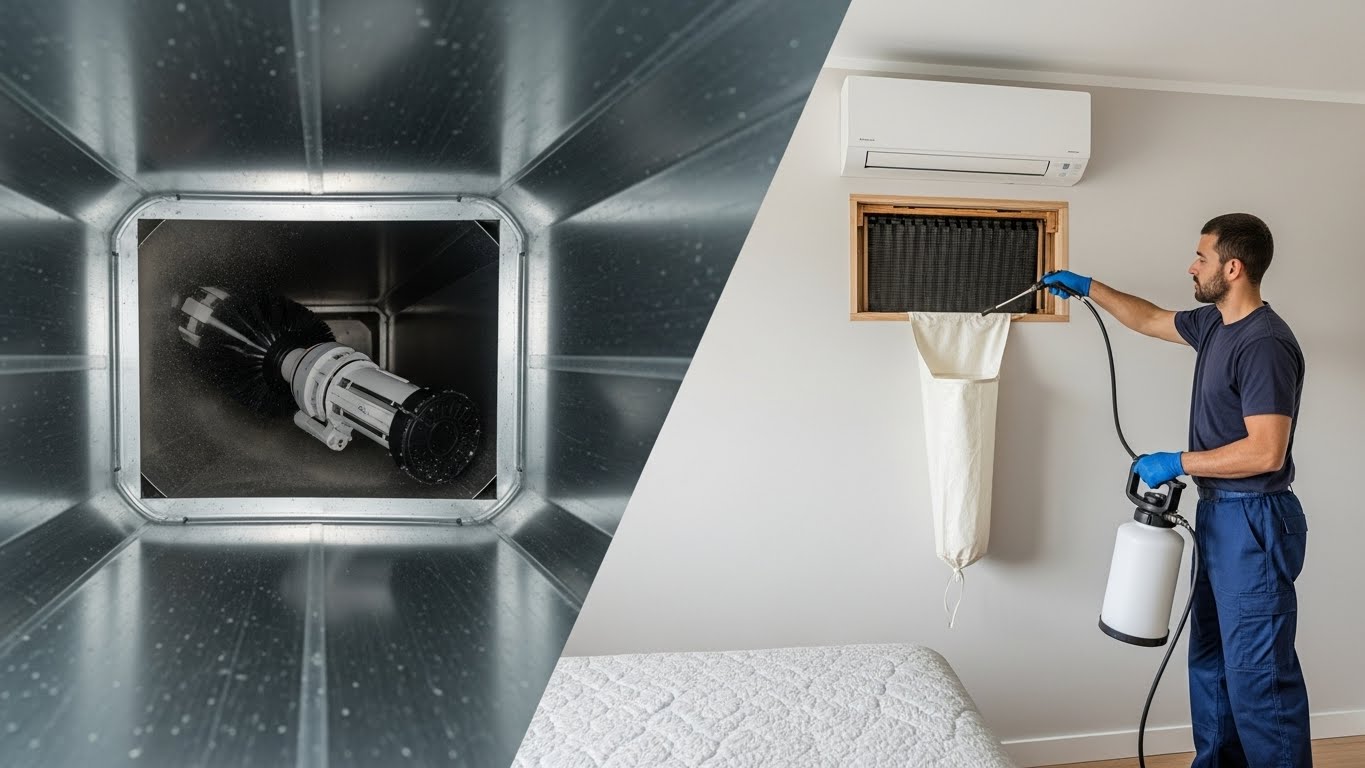
When you’re deciding between central AC and split AC systems, understanding their maintenance differences can save you hundreds of dollars annually. Each system demands a unique cleaning approach—one relies on extensive ductwork while the other focuses on individual indoor units. The cost gap might surprise you, and so will the potential savings on your utility bills. Here’s what you need to know before scheduling your next service call.
Key Takeaways
- Central AC systems require professional duct cleaning every 3-5 years to remove accumulated dust, debris, and contaminants from extensive ductwork.
- Split AC systems eliminate ductwork entirely, focusing maintenance on indoor unit components like air filters and evaporator coils instead.
- Central AC duct cleaning costs $300-$500, while split AC cleaning runs $100-$200 per indoor unit with annual professional maintenance required.
- Signs both systems need cleaning include reduced airflow, excessive dust buildup, unusual odors, inconsistent temperatures, and strange operational noises.
- Properly cleaned systems of either type can reduce utility bills by 15-25% through improved efficiency and airflow.
How Central AC Systems and Split AC Units Work
When you’re comparing duct cleaning needs between central AC and split AC systems, understanding how each one operates makes all the difference. Central AC relies on an extensive network of ducts to distribute cooled air throughout your home. A single outdoor unit connects to an indoor air handler, pushing conditioned air through supply vents while return ducts pull warm air back for cooling.
Split AC systems work differently. Each indoor unit connects directly to an outdoor compressor without requiring ductwork. This design affects airflow optimization since air travels shorter distances. When conducting energy efficiency comparisons, split systems often perform better because they don’t lose cooled air through leaky ducts. Your cleaning requirements depend entirely on which system you’ve installed.
Duct Cleaning Requirements for Central Air Conditioning
Because central AC systems push air through extensive ductwork, they accumulate dust, debris, and contaminants that split systems simply don’t face. You’ll need professional cleaning every three to five years, depending on factors like pets, allergies, and local air quality.
Your ductwork requires regular inspection for leaks, gaps, and deterioration. Efficient duct sealing prevents conditioned air from escaping into unconditioned spaces like attics and crawlspaces, which directly impacts your energy bills and system performance.
You should also verify proper insulation surrounds your ducts, especially in extreme temperature zones. Without it, you’re losing efficiency and potentially creating condensation problems.
Signs you need immediate duct cleaning include visible mold, pest infestations, excessive dust around vents, and musty odors when your system runs.
Maintenance Needs for Ductless Split AC Systems
Ductless split systems eliminate the extensive ductwork concerns of central AC, but they bring their own maintenance demands.
You’ll need to focus on the indoor unit’s components rather than sprawling duct networks. Air filter replacement becomes your primary ongoing task—most manufacturers recommend cleaning filters every two weeks and replacing them monthly during heavy use. Neglecting this simple step reduces efficiency and degrades indoor air quality.
Refrigerant level checks require professional attention at least annually. Unlike central systems, split units have longer refrigerant lines connecting indoor and outdoor components, creating more potential leak points.
You should also clean the indoor unit’s evaporator coils, check condensate drain lines for clogs, and inspect the outdoor compressor for debris. These targeted maintenance tasks keep your ductless system running efficiently without duct-related complications.
Cost Comparison Between Central AC and Split AC Cleaning
While both systems require regular professional maintenance, the costs differ substantially based on complexity and labor time. Central AC duct cleaning typically runs $300 to $500, covering the entire ductwork network throughout your home. Split AC cleaning costs $100 to $200 per unit, but you’ll multiply this by each indoor unit you own.
When conducting a cost benefit analysis, consider your home’s setup. A single split system costs less annually, but homes with multiple units may approach central AC expenses. Energy efficiency comparisons also factor into long-term costs—clean systems of either type reduce your utility bills by 15-25%.
You should budget for central AC cleaning every 3-5 years, while split systems need annual attention for ideal performance.
Signs Your AC System Needs Professional Cleaning
Recognizing when your AC system needs professional cleaning prevents minor issues from becoming expensive repairs. Watch for reduced airflow from vents, which often indicates airflow obstructions within your ductwork or unit. If you notice excessive dust buildup on registers or furniture shortly after cleaning, your system is likely circulating contaminated air.
Unusual odors when your AC runs signal mold, mildew, or debris accumulation inside the system. You might also experience inconsistent temperatures between rooms or higher energy bills without increased usage. Strange noises like rattling or whistling suggest blockages affecting performance.
For split systems, check the indoor unit for visible dirt on filters and coils. Central systems require attention when return vents appear discolored or dusty. Don’t ignore these warning signs.
Frequently Asked Questions
Can I Use the Same Cleaning Products for Both Central and Split AC Systems?
You shouldn’t use identical products for both systems due to cleaning product differences. Central AC ducts require specialized solutions for ductwork, while split ACs need coil-specific cleaners. Always check cleaning solutions compatibility before applying to your specific system.
How Long Does Professional Cleaning Take for Each Type of AC System?
You’ll typically spend 3-5 hours on central AC cleaning duration due to extensive ductwork, while split systems take 1-2 hours. Both require thorough equipment inspection, but central systems demand more time for complete servicing.
Will Cleaning My AC System Help Reduce My Monthly Energy Bills?
Yes, cleaning your AC system can lower your energy bills. You’ll see routine maintenance benefits like improved airflow and efficiency. Energy efficiency comparisons show clean systems use less power, saving you money monthly.
Do I Need to Leave My Home During Professional AC Cleaning Services?
You typically don’t need to leave your home during professional AC cleaning services. However, you may want to avoid disruptions by staying in another room. Plan accordingly, as the process usually takes one to three hours.
Can Dirty AC Systems Cause Health Problems for People With Allergies or Asthma?
Yes, dirty AC systems can greatly worsen allergies and asthma. You’ll experience poor air circulation issues that trap allergens indoors, while mold buildup concerns create additional respiratory triggers. Regular cleaning helps you breathe easier and reduces symptoms.
Conclusion
Whether you’re maintaining a central AC with its extensive ductwork or a ductless split system with individual units, regular cleaning is essential for ideal performance. You’ll save money on utility bills and extend your system’s lifespan by staying on top of maintenance. Don’t wait for problems to arise—schedule professional cleaning based on your specific system’s needs, and you’ll enjoy cleaner air and lower energy costs year-round.

