
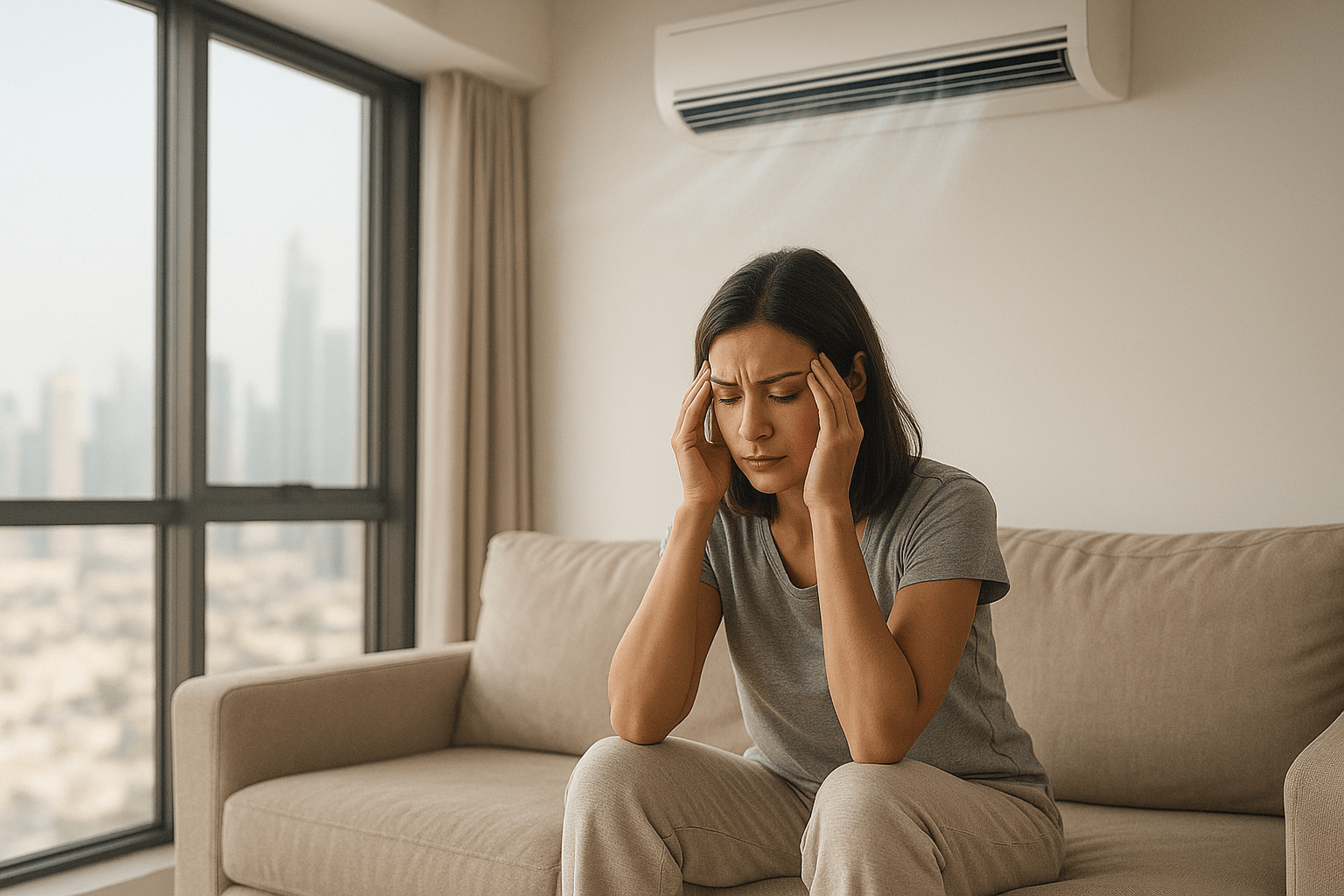
You’ve likely experienced that nagging headache after spending hours in an air-conditioned environment, but you might not realize the complex physiological mechanisms at work. Your body’s response to AC involves multiple interconnected pathways—from trigeminal nerve stimulation triggered by temperature fluctuations to dehydration caused by reduced humidity levels. Understanding these evidence-based connections between environmental controls and neurological responses will help you identify whether your cooling system is the culprit behind your discomfort.
Key Takeaways
- Air conditioning can trigger headaches through rapid temperature changes that cause blood vessel constriction and reduced cerebral blood flow.
- Reduced humidity from AC systems leads to dehydration of mucous membranes and accelerated water loss, contributing to headache development.
- Poor air quality from circulating allergens, dust, and chemical irritants can cause inflammation and trigger headaches in sensitive individuals.
- AC noise creates repetitive stimulation that can overstimulate trigeminal nerve pathways and trigger autonomic stress responses causing headaches.
- Prevention includes maintaining 20-22°C temperatures, staying hydrated, regular filter changes, and using air purifiers to improve indoor air quality.
How Air Conditioning Triggers Headaches
When you’re exposed to air conditioning systems, several physiological mechanisms can trigger headache episodes through distinct pathways. Rapid temperature fluctuations cause vasoconstriction and vasodilation of blood vessels in your head and neck, creating vascular tension headaches.
The dry air produced by AC units reduces ambient humidity levels below ideal ranges, leading to dehydration of mucous membranes and subsequent cranial pressure changes.
Additionally, recirculated air often contains allergens, dust particles, and chemical irritants that can trigger headaches through inflammatory responses. Poor ventilation systems may accumulate carbon dioxide, reducing oxygen availability and causing tension-type headaches.
The constant noise from AC compressors creates low-frequency vibrations that can overstimulate your trigeminal nerve pathways, particularly if you’re sensitive to environmental stimuli or have pre-existing migraine conditions.
Dehydration and Temperature-Related Headache Causes
The physiological mechanisms underlying dehydration-induced headaches become particularly pronounced in air-conditioned environments where humidity levels drop markedly below favorable ranges of 40-60%. When you’re exposed to air conditioning systems, moisture extraction from ambient air accelerates transepidermal water loss, depleting your body’s fluid reserves. This dehydration causes cerebral blood vessels to narrow and brain tissue to contract slightly, creating tension that manifests as pulsating pain intensifying with movement.
Temperature-related headache pathogenesis occurs through rapid vasoconstriction when you encounter cold air conditioning output. Your blood vessels constrict abruptly, reducing cerebral blood flow and triggering acute, stabbing pain. Maintaining suitable indoor temperature between 20-22°C prevents these extreme physiological responses. You can mitigate dehydration headaches through consistent fluid intake, counteracting air conditioning’s desiccating effects on your body’s homeostatic balance.
Poor Air Quality and Airborne Irritants
Beyond physiological responses to temperature and humidity changes, air conditioning systems can distribute contaminated air throughout indoor spaces, introducing allergens, pollutants, and chemical irritants that trigger headaches through inflammatory pathways.
Poor indoor air quality occurs when HVAC systems circulate airborne particulates, mold spores from contaminated coils, and volatile organic compounds off-gassed from building materials. You’re particularly vulnerable if you have allergic sensitivities or chemical intolerances that activate neuroinflammatory responses leading to cephalgia.
Inadequate ventilation in sealed buildings creates “sick building syndrome,” where concentrated irritants accumulate and provoke headache symptoms. Your risk increases when filtration systems fail to capture microscopic contaminants or when maintenance schedules allow microbial growth on cooling components.
Proper HVAC maintenance, high-efficiency filtration, and adequate fresh air exchange rates considerably reduce exposure to headache-triggering airborne irritants.
Noise and Environmental Factors
How does environmental noise from air conditioning systems contribute to headache development? Poorly maintained AC units generate intermittent or repetitive noise that can trigger tension headaches and migraines. These noise signals indirectly activate your autonomic nervous and neuroendocrine systems, which regulate stress responses and contribute to muscle tension-induced headaches.
Environmental factors extend beyond acoustic disturbances. Cold air exposure from air conditioning causes rapid blood vessel constriction or trigeminal nerve stimulation, resulting in sharp, stabbing headaches that typically resolve within thirty minutes of temperature normalization. Additionally, AC systems can circulate airborne illnesses like COVID-19 and influenza, where headaches manifest as primary symptoms. Your susceptibility to these environmental factors depends on system maintenance, temperature differentials, and individual neurological sensitivity to noise-induced stress responses.
Prevention Strategies and Treatment Options
Since air conditioning-related headaches stem from multiple physiological mechanisms, prevention requires a systematic approach targeting hydration, environmental controls, and maintenance protocols. You’ll need to maintain adequate fluid intake to prevent dehydration-induced headaches, as reduced humidity from AC systems accelerates fluid loss. Set your indoor temperature between 20-22°C to minimize thermal stress and vascular responses that trigger cephalgia.
Optimize air quality through regular filter replacement and air purifier installation to reduce particulate matter and allergens. These contaminants can cause inflammatory responses leading to headache onset. If muscle tension contributes to your symptoms, physiotherapy consultation can address postural strain and cervical dysfunction. This multi-modal approach addresses the primary etiological factors: dehydration, temperature fluctuations, and compromised indoor air quality that characterize AC-related headache syndromes.
Frequently Asked Questions
Why Does My AC Give Me a Headache?
Your AC triggers headaches through rapid temperature changes that constrict blood vessels, dry indoor air causing dehydration, and poor air circulation reducing oxygen levels, creating vasoconstrictive responses and inflammatory processes.
How Do You Get Rid of a Headache From the AC?
You’ll find cool air relief by adjusting thermostat settings, maintaining ideal indoor humidity levels with humidifiers, ensuring proper air filter maintenance, staying hydrated, and applying cold compresses for symptom management.
Conclusion
You can effectively prevent AC-induced headaches by maintaining ideal indoor temperatures between 68-72°F, ensuring adequate hydration, and performing regular HVAC maintenance. If you’re experiencing persistent symptoms, you’ll need to address multiple causative factors simultaneously through environmental modifications and proper air filtration. Monitor your trigeminal nerve sensitivity to temperature fluctuations and implement humidity control measures. Should headaches persist despite these interventions, you’ll require thorough medical evaluation to rule out underlying pathophysiology.

