
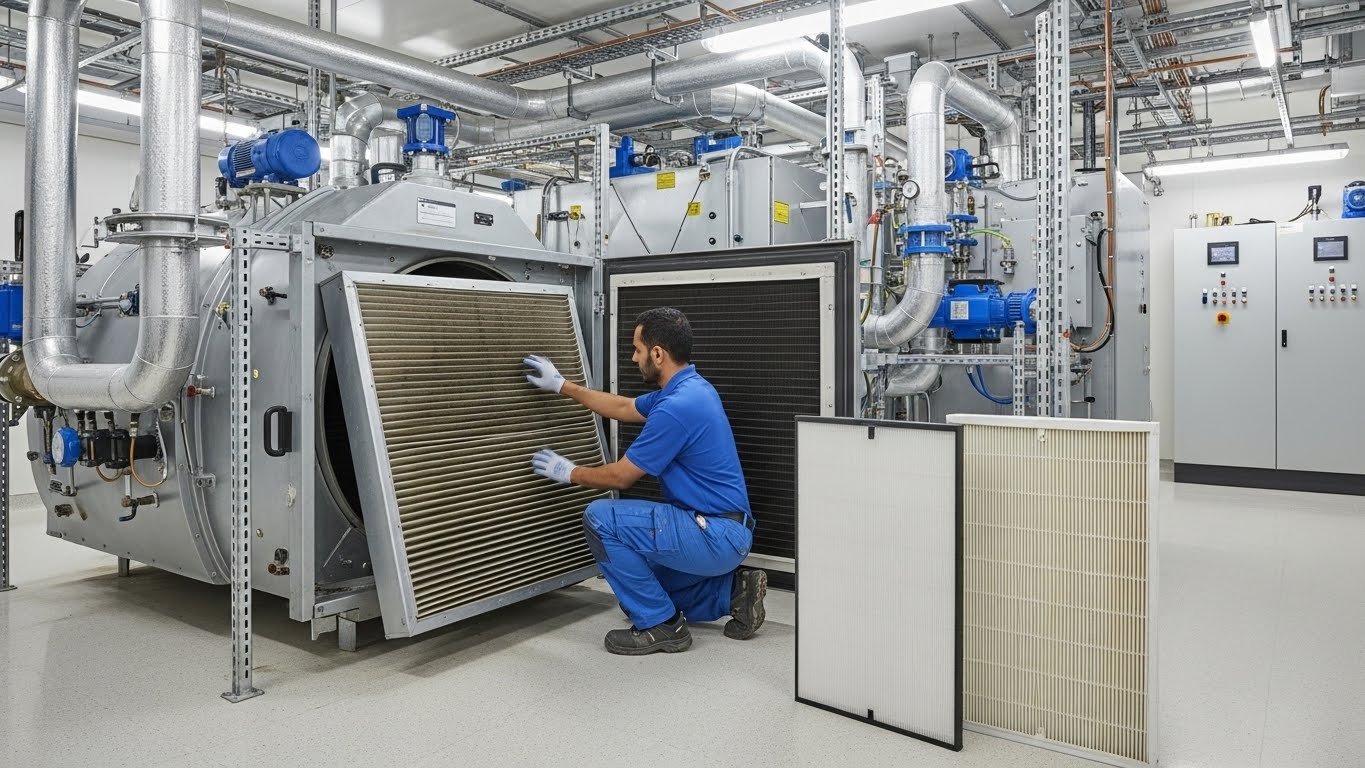
When you’re managing a commercial building in Dubai, your air handling units work harder than almost any other system. These critical HVAC components face unceasing challenges from extreme heat, airborne sand, and coastal humidity—conditions that can rapidly degrade performance and spike energy costs. Understanding how AHUs function and what they require isn’t just technical knowledge; it’s essential for protecting your investment. What happens when maintenance falls behind might surprise you.
Key Takeaways
- Air handling units are large metal boxes containing fans, filters, coils, and dampers that condition and circulate air throughout buildings.
- Dubai’s extreme heat, desert sand, and coastal humidity create uniquely harsh conditions that accelerate AHU component deterioration and require specialized maintenance.
- Warning signs requiring immediate attention include unusual noises, excessive vibrations, weak airflow, and inconsistent temperatures throughout the building.
- Essential maintenance tasks include monthly filter replacement, quarterly coil cleaning, and regular belt and bearing inspections to prevent failures.
- Proactive AHU maintenance in Dubai reduces energy consumption, extends equipment lifespan, and maintains comfortable indoor environments despite extreme outdoor conditions.
What Is an Air Handling Unit and How Does It Work?
An air handling unit (AHU) is a large metal box that conditions and circulates air throughout your building’s HVAC system. You’ll typically find these units on rooftops or in mechanical rooms across Dubai’s commercial and residential properties.
The essential AHU components include fans, filters, heating and cooling coils, dampers, and humidifiers. Each element works together to process incoming air before distributing it through your ductwork.
Here’s how AHU functions operate: First, the unit draws in outdoor and return air. Filters remove dust and contaminants. Then, coils heat or cool the air to your desired temperature. Finally, fans push the conditioned air through ducts to occupied spaces. This continuous cycle maintains comfortable indoor environments despite Dubai’s extreme outdoor temperatures.
Key Components of AHU Systems in Commercial Buildings
Understanding how your AHU works is just the starting point—knowing what’s inside these units helps you maintain them effectively and troubleshoot problems when they arise.
Your commercial AHU contains several critical components. The supply and return fans move air throughout your building, while filters remove contaminants before distribution. Cooling and heating coils regulate temperature, and dampers control airflow volume. Humidifiers maintain ideal moisture levels essential for Dubai’s dry seasons.
Modern units offer various system configuration options to match your building’s specific needs. You’ll find mixing boxes that blend fresh and recirculated air, variable frequency drives for energy efficiency, and sensors monitoring everything from pressure to humidity.
If your system includes direct expansion coils, you must follow refrigerant monitoring requirements to comply with UAE environmental regulations and prevent costly leaks.
Why Dubai’s Climate Demands Specialized AHU Maintenance
Dubai’s extreme heat puts tremendous stress on your AHU systems, forcing them to work harder and longer than units in temperate climates. You’re also dealing with a unique combination of fine desert sand and coastal humidity that can clog filters, corrode components, and reduce system efficiency faster than you might expect. Understanding these environmental challenges helps you develop a maintenance approach that keeps your air handling units running reliably year-round.
Extreme Heat Challenges
When summer temperatures in Dubai regularly exceed 45°C and humidity levels climb above 80%, air handling units face some of the most demanding operating conditions on Earth. These extreme weather patterns force your AHU components to work harder and wear faster than systems in moderate climates.
High ambient temperatures create specific stress points you must address through targeted maintenance:
| Challenge | Impact on AHU |
|---|---|
| Coil strain | Reduced heat transfer efficiency |
| Motor overload | Increased electrical consumption |
| Belt deterioration | Faster wear and slippage |
| Filter clogging | Sand and dust accumulation |
| Refrigerant pressure | System performance fluctuations |
You’ll find that components designed for temperate regions simply can’t withstand Dubai’s punishing conditions without modified maintenance schedules and specialized care protocols.
Sand and Humidity Effects
Beyond the extreme heat, Dubai’s unique combination of fine desert sand and coastal humidity creates a double threat that accelerates AHU deterioration at alarming rates.
You’ll find that sand accumulation clogs filters faster than in temperate climates, forcing your system to work harder and consume more energy. The microscopic particles penetrate deep into coils, fans, and ductwork, causing abrasive damage that shortens component lifespan.
Meanwhile, humidity control becomes critical when moisture levels spike during coastal winds. High humidity promotes corrosion on metal components and creates ideal conditions for mold growth within your AHU system. When sand and moisture combine, they form a paste-like residue that’s particularly difficult to remove.
Regular inspections and aggressive cleaning schedules aren’t optional here—they’re essential for protecting your investment.
Signs Your Air Handling Unit Needs Immediate Attention
You don’t want to wait until your AHU fails completely before taking action. Watch for warning signs like unusual grinding, squealing, or rattling noises, as well as excessive vibrations that indicate worn bearings or misaligned components. If you’re noticing weak airflow or inconsistent temperatures throughout your building, your air handling unit is telling you it needs immediate professional attention.
Unusual Noises and Vibrations
Strange sounds or vibrations coming from your air handling unit shouldn’t be ignored, as they often signal mechanical problems that can quickly escalate into costly repairs. Mysterious noises during operation typically indicate worn bearings, loose components, or debris trapped within the system. Unusual vibration patterns suggest imbalanced fan wheels or deteriorating motor mounts.
Pay attention to these warning signs:
- Grinding or scraping sounds indicating metal-on-metal contact
- Rattling noises pointing to loose panels or ductwork connections
- High-pitched squealing suggesting belt slippage or bearing failure
When you detect these symptoms, contact a qualified technician immediately. Early intervention prevents minor issues from developing into major system failures, protecting both your equipment investment and your building’s indoor air quality.
Poor Airflow Performance
While unusual noises alert you to mechanical problems, poor airflow performance presents an equally serious concern that demands prompt attention. You’ll notice insufficient air circulation through uneven temperatures across rooms, stuffy conditions, or weak air coming from vents.
Several factors cause airflow restrictions in your AHU system. Clogged filters rank among the most common culprits, blocking air passage and forcing your unit to work harder. Damaged or collapsed ductwork also reduces delivery efficiency drastically.
Check your dampers—they may be stuck or improperly positioned. Fan belt slippage or motor issues can decrease the system’s ability to push air through your building effectively.
Don’t ignore these warning signs. Reduced airflow strains your entire HVAC system, increases energy consumption, and compromises indoor air quality throughout your Dubai property.
Essential AHU Maintenance Tasks for Optimal Performance
Keeping up with regular AHU maintenance tasks guarantees your system runs efficiently and lasts longer in Dubai’s demanding climate. Establishing regular maintenance schedules prevents costly breakdowns and maintains indoor air quality. Implementing proactive inspection protocols helps you identify wear before it becomes a major problem.
Focus on these critical maintenance tasks:
- Filter replacement – Change filters monthly during peak summer months when dust and sand infiltrate your system constantly.
- Coil cleaning – Remove debris from evaporator and condenser coils quarterly to maintain heat transfer efficiency.
- Belt and bearing inspection – Check fan belts for tension and wear while lubricating bearings to prevent motor strain.
You’ll reduce energy consumption and extend equipment lifespan by prioritizing these essential tasks consistently.
How Dust and Sand Impact Air Handling Units in the UAE
Dubai’s harsh desert environment presents unique challenges for your air handling units that you won’t find in milder climates. Fine sand and dust particles accelerate filter clogging, coat your cooling coils with contamination that reduces heat transfer effectiveness, and wear down mechanical components faster than normal operating conditions would. Understanding these impacts helps you implement the right maintenance strategies to protect your AHU investment and maintain ideal indoor air quality.
Filter Clogging Challenges
How quickly can Dubai’s airborne dust and sand compromise your building’s air handling unit? During sandstorms, filters can clog within days rather than weeks, drastically reducing airflow and system efficiency.
Customized filter selection becomes critical in this environment. You’ll need filters rated specifically for fine particulate matter common in desert climates. Standard filters simply can’t handle the load.
Key filter clogging consequences you’ll face:
- Increased energy consumption as fans work harder to push air through blocked filters
- Reduced indoor air quality when filters fail to capture contaminants
- Potential coil damage from particles bypassing saturated filters
Preventive maintenance strategies must include more frequent filter inspections and replacements than manufacturer guidelines suggest. Dubai’s conditions demand a proactive approach.
Coil Contamination Effects
When filters become overwhelmed or bypass occurs, contamination quickly spreads to your evaporator and condenser coils. Desert particles create an insulating layer that dramatically reduces heat transfer efficiency. You’ll notice your system working harder while providing less cooling capacity.
The coil fouling effects extend beyond simple efficiency losses. Accumulated debris traps moisture against metal surfaces, accelerating corrosion and potentially causing refrigerant leakage impact that compromises your entire system. Sand particles can also erode fin surfaces, permanently damaging heat exchange capabilities.
Contaminated coils force compressors to run longer cycles, increasing energy consumption by 20-40%. You’ll experience higher operating costs and shortened equipment lifespan. Regular coil inspections and professional cleaning prevent these cascading problems, protecting your investment and maintaining ideal indoor comfort throughout Dubai’s demanding climate conditions.
Component Wear Acceleration
Beyond coil damage, airborne particulates accelerate wear across nearly every mechanical component in your AHU system. Fine sand acts as an abrasive agent, grinding against moving parts and protective surfaces throughout daily operation.
Component degradation occurs fastest in these critical areas:
- Fan bearings – Particulate infiltration causes friction buildup and premature failure
- Belt drives – Sand particles embed in rubber, creating accelerated wear patterns
- Damper actuators – Grit accumulation restricts movement and strains motors
You’ll notice increased energy consumption as worn components work harder to maintain airflow. Shaft seals deteriorate faster, allowing lubricant contamination that compounds the damage cycle. Motor windings collect dust layers that trap heat, reducing electrical efficiency and shortening operational lifespan. Regular inspections help you identify wear patterns before catastrophic failures occur.
Energy Efficiency Benefits of Regular AHU Servicing
Regular AHU servicing delivers three measurable energy efficiency benefits that directly impact your building’s operational costs. First, clean coils and filters reduce airflow resistance, allowing fans to operate at lower speeds while maintaining output. This alone can generate energy savings of 15-25% on fan power consumption.
Second, properly calibrated sensors and controls prevent overcooling and overheating, eliminating wasted energy from temperature overshoots. Your system responds accurately to actual conditions rather than faulty readings.
Third, well-maintained belt drives and lubricated bearings minimize friction losses throughout the system. These operational efficiencies compound over time, reducing your monthly utility bills substantially.
In Dubai’s climate, where AHUs run continuously, even small efficiency gains translate to significant annual cost reductions for your facility.
Choosing the Right AHU Maintenance Provider in Dubai
Achieving these energy efficiency gains requires partnering with a qualified AHU maintenance provider who understands Dubai’s unique demands. When vetting AHU providers, you’ll want to verify their experience with your specific unit types and building configurations.
Evaluating contractor credentials should include checking these essential factors:
- Valid Dubai Municipality licenses and HVAC certifications
- Documented experience maintaining AHUs in similar commercial or residential properties
- Emergency response capabilities with guaranteed service timeframes
You should also request references from current clients and review their preventive maintenance protocols. A reliable provider will offer transparent pricing, detailed service reports, and use manufacturer-approved replacement parts. Don’t hesitate to ask about their technicians’ training programs and familiarity with both traditional and modern AHU systems.
Cost Implications of Neglected Air Handling Unit Care
How much does skipping routine AHU maintenance actually cost your building’s bottom line? When you ignore regular servicing, you’re setting yourself up for unscheduled breakdowns that demand emergency repairs—often at premium rates during Dubai’s peak cooling season.
Dirty filters and clogged coils force your system to work harder, resulting in higher utility bills that can increase by 15-25% annually. You’ll also face shortened equipment lifespan, meaning premature replacement costs that run into tens of thousands of dirhams.
Beyond direct expenses, neglected AHUs compromise indoor air quality, potentially triggering tenant complaints and lease terminations. Your building’s reputation suffers when comfort standards drop. Investing in preventive maintenance now protects you from these compounding costs and keeps your HVAC system running efficiently year-round.
Best Practices for Year-Round AHU Performance in Desert Climates
Because Dubai’s extreme heat and dust storms place unique demands on air handling units, you’ll need a maintenance strategy adapted specifically to desert conditions. Implementing seasonal maintenance schedules guarantees your system performs optimally during peak summer months and milder winter periods.
Modern facilities now leverage predictive analytics to anticipate component failures before they occur, reducing costly emergency repairs.
Follow these essential practices for desert climate AHU management:
- Increase filter inspections to weekly during sandstorm season
- Apply protective coatings to coils to prevent sand erosion
- Monitor refrigerant levels monthly during extreme heat periods
You should also schedule thorough system evaluations before summer begins. This proactive approach maximizes efficiency and extends equipment lifespan significantly.
Frequently Asked Questions
How Often Should AHU Filters Be Replaced in Dubai Residential Buildings?
You should replace your AHU filters every 1-3 months in Dubai residential buildings due to high dust levels. Maintain a regular inspection schedule monthly and guarantee proper filter disposal according to local environmental regulations.
Can I Perform Basic AHU Maintenance Myself or Hire Professionals?
You can handle basic tasks like filter checks, but DIY AHU maintenance risks include voiding warranties and causing damage. Professional maintenance advantages include knowledge, proper tools, and compliance with Dubai’s building regulations.
What Is the Typical Lifespan of an AHU System in Dubai?
You can expect your AHU system to last 15-25 years in Dubai’s harsh climate. Following preventive maintenance schedules and investing in energy efficient upgrades will considerably extend your unit’s operational lifespan and performance.
Are There Specific AHU Regulations or Codes Required in Dubai?
Yes, you’ll need to follow Dubai Municipality’s building code requirements and DEWA regulations for AHU installations. You’re also required to comply with maintenance regulations that mandate regular inspections, filter replacements, and performance testing for commercial buildings.
How Long Does a Complete AHU Maintenance Service Usually Take?
You’ll typically need 2-4 hours for complete AHU maintenance, depending on unit size. Seasonal temperature fluctuations in Dubai demand a preventive maintenance schedule, so you’re ensuring ideal performance during extreme summer heat.
Conclusion
Your air handling unit works tirelessly against Dubai’s harsh climate, and it deserves proper care in return. By staying proactive with maintenance, you’ll enjoy lower energy bills, better air quality, and fewer unexpected breakdowns. Don’t wait until your system fails during peak summer heat. Partner with a qualified AHU maintenance provider today, and you’ll keep your building comfortable while protecting your bottom line for years to come.

