
You’ve probably seen ads promising duct cleaning services, but what actually happens when technicians arrive at your home? Understanding the process helps you distinguish between thorough professionals and companies cutting corners. From initial inspection to final airflow testing, legitimate duct cleaning involves specific steps and specialized equipment—not just a quick vacuum. Here’s exactly what you should expect when you’re paying for this service.
Key Takeaways
- Professional AC duct cleaning begins with a thorough system inspection using specialized cameras to assess dust buildup, mold, and structural issues.
- Technicians protect your home by laying drop cloths, sealing unused vents, and covering furniture and electronics before starting work.
- High-powered HEPA-filtered vacuums and rotary brush tools scrub and extract stubborn debris from all duct surfaces.
- Supply and return vents are removed, cleaned, sanitized with EPA-registered antimicrobial treatments, and carefully reinstalled.
- Main duct lines and trunk systems are cleaned using high-pressure air tools and specialized brushes to restore optimal airflow.
Initial System Inspection and Assessment
When you schedule professional AC duct cleaning, technicians don’t simply start vacuuming—they begin with a thorough inspection of your entire HVAC system. This system condition evaluation identifies problem areas, blockages, and potential damage before any cleaning begins.
During this phase, technicians examine your ductwork’s interior using specialized cameras. They’ll check for mold growth, pest infestations, excessive dust buildup, and structural issues like disconnected joints or deteriorating insulation. You’ll receive documentation of their findings, giving you clear evidence of your system’s current state.
The overall air quality analysis measures contaminants circulating through your home. Technicians test for allergens, particulates, and microbial presence. This baseline data helps determine which cleaning methods your system requires and provides a comparison point after service completion.
Protecting Your Home and Furnishings
Before technicians commence the actual cleaning process, they’ll take careful steps to safeguard your home’s interior from dust and debris. They’ll lay down drop cloths or plastic sheeting around work areas, covering your floors, furniture, and belongings. This preparation is essential for dust reduction throughout the service.
Technicians also seal supply registers in rooms where they’re not actively working. This prevents dislodged contaminants from spreading into your living spaces. Many professionals use corner guards to protect walls and doorframes when moving equipment.
Your HVAC system’s surrounding area receives special attention too. Workers will cover nearby electronics and treasured items that could be affected during the process. These protective measures guarantee you’ll experience indoor air quality improvement without dealing with cleanup afterward.
Specialized Equipment Used During the Cleaning Process
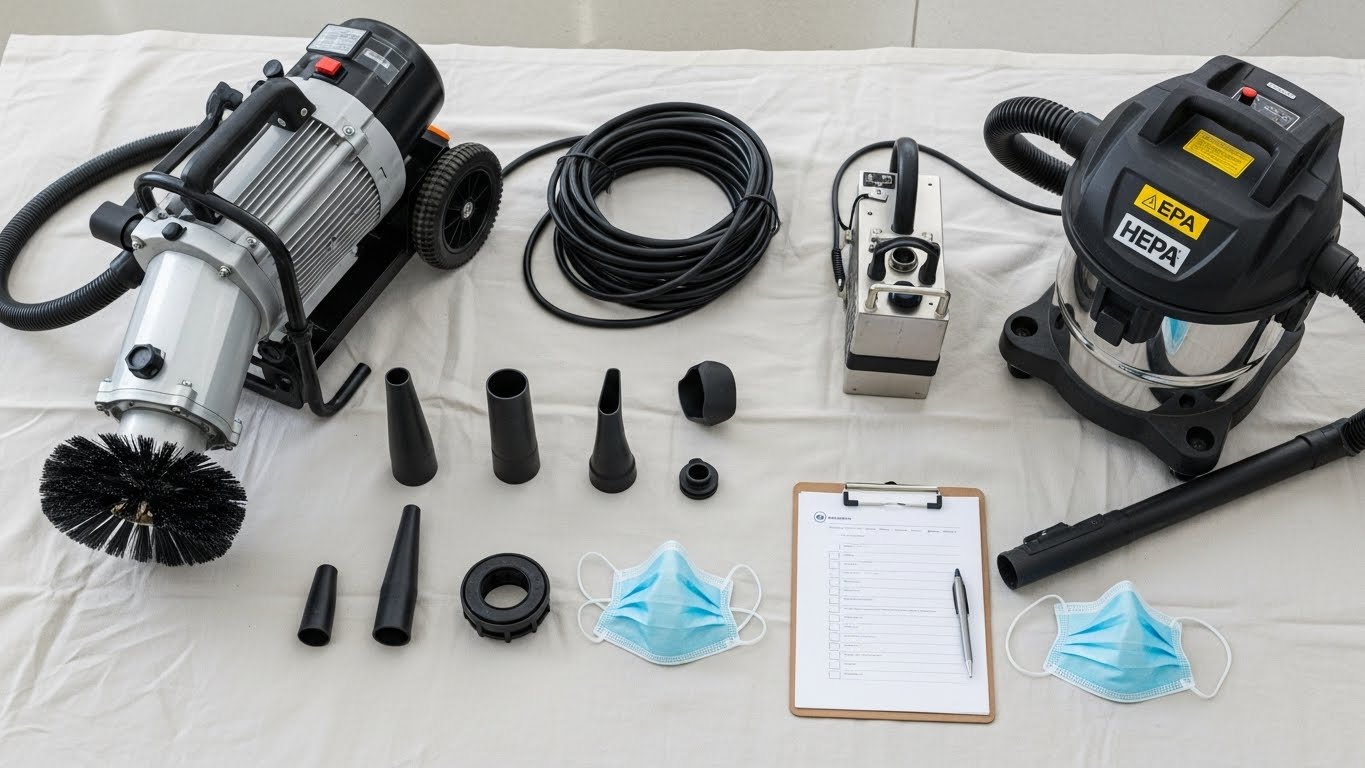
When you hire professional duct cleaners, they arrive equipped with specialized tools designed to thoroughly remove contaminants from your system. High-powered vacuum systems create negative pressure throughout your ductwork, capturing debris and preventing it from spreading into your living spaces. Rotary brush tools then scrub the interior surfaces of your ducts, dislodging stubborn buildup that ordinary cleaning methods can’t reach.
High-Powered Vacuum Systems
High-powered vacuum systems form the backbone of professional AC duct cleaning, generating negative pressure that’s exponentially stronger than standard household vacuums. These industrial-grade units create suction that pulls debris, dust, and contaminants directly from your ductwork into sealed containment systems.
Modern professional vacuums offer significant advantages:
- Quieter operation compared to older models, reducing disruption to your home
- Energy efficiency that allows sustained use without overheating
- HEPA filtration that captures 99.97% of particles as small as 0.3 microns
You’ll notice technicians connect these systems directly to your main trunk lines, creating continuous airflow throughout the entire duct network. This negative pressure prevents loosened contaminants from escaping into your living spaces during cleaning. The result? Thorough removal without spreading pollutants through your home.
Rotary Brush Tools
While vacuum systems pull contaminants out of your ducts, rotary brush tools actively dislodge the stubborn buildup that clings to interior surfaces. These motorized devices spin at high speeds, scrubbing away years of accumulated dust, debris, and microbial growth that simple suction can’t remove.
Technicians use flexible rod attachments to navigate through your ductwork’s twists and turns, reaching areas that would otherwise remain inaccessible. The rotating action breaks the bond between contaminants and duct walls without damaging the material.
For particularly challenging sections, professionals employ whip brush extensions that thrash against surfaces, knocking loose compacted debris. You’ll notice these tools come in various diameters to match your specific duct sizes, ensuring thorough contact with every surface. This mechanical agitation combined with simultaneous vacuuming delivers extensive cleaning results.
Supply and Return Vent Cleaning Procedures
When your HVAC technician begins cleaning supply and return vents, they’ll first carefully remove each vent cover to access the ductwork behind it. Once exposed, they’ll use powerful vacuum equipment and specialized brushes to extract accumulated dust, allergens, and debris from the vent openings. After thorough debris removal, they’ll sanitize the components and reinstall the vent covers to complete the process.
Vent Cover Removal Process
Proper vent cover removal sets the foundation for thorough duct cleaning and prevents damage to your walls or ceiling. Technicians first assess your vent cover materials—whether metal, plastic, or wood—to determine the appropriate removal technique. They’ll also inspect vent cover condition to identify any warping, rust, or broken clips that require careful handling.
The removal process typically involves:
- Unscrewing fasteners with the correct driver to avoid stripping
- Supporting the cover while releasing it from the opening
- Labeling each cover’s location for accurate reinstallation
Once removed, technicians set covers aside for separate cleaning or replacement consideration. This systematic approach guarantees you won’t encounter mismatched vents or damaged mounting points when the job’s complete.
Debris Extraction Methods
Effective debris extraction relies on specialized tools that dislodge and capture contaminants from both supply and return vents without spreading particles throughout your home. Technicians employ debris agitation techniques using rotating brushes, compressed air whips, and skipper balls that break loose stubborn buildup clinging to duct walls.
Once agitated, powerful negative air machines create suction that pulls dislodged particles toward collection units equipped with HEPA filtration. Your technician accesses multiple ductwork access points to guarantee meticulous cleaning throughout the entire system.
For return vents, which typically accumulate more debris due to their intake function, professionals may use stronger agitation methods. Supply vents receive targeted attention to remove dust that could blow into living spaces. This systematic approach ensures complete contaminant removal from every reachable section.
Sanitization and Reinstallation
After debris extraction, technicians apply EPA-registered antimicrobial treatments to your ductwork’s interior surfaces, targeting any remaining bacteria, mold spores, or fungi that mechanical cleaning couldn’t eliminate. Proper sanitization techniques guarantee these treatments reach every corner of your system without leaving harmful residues.
Once sanitization is complete, effective reinstallation procedures restore your vents to ideal condition. Technicians will:
- Clean each vent cover thoroughly, removing accumulated dust and grime
- Inspect gaskets and seals for damage that could cause air leaks
- Secure all connections tightly to maintain system efficiency
Your supply and return vents get reinstalled with precision, confirming proper airflow throughout your home. This final step completes the cleaning process, leaving you with a fully functional, sanitized HVAC system ready for operation.
Main Duct Line and Trunk Cleaning Methods
When technicians move beyond individual vents to tackle the main duct lines and trunks, they’re addressing the central arteries of your HVAC system. Before cleaning begins, professionals conduct a thorough ductwork condition assessment to identify damage, gaps, or areas of heavy buildup. They’ll also take air flow measurements to establish baseline performance metrics.
The cleaning process typically involves inserting rotating brush systems or air whips directly into trunk lines. These tools dislodge compacted debris that’s accumulated over years. Simultaneously, powerful vacuum systems maintain negative pressure, capturing loosened contaminants before they can spread.
For larger trunk lines, technicians may use specialized agitation equipment that reaches every interior surface. You’ll notice improved system efficiency once these primary pathways are thoroughly cleared of obstructions.
Sanitization and Antimicrobial Treatments
Once the physical debris removal concludes, many professional duct cleaning services offer sanitization treatments to address biological contaminants you can’t simply brush away. These EPA-registered antimicrobial solutions target mold spores, bacteria, and fungi that thrive in dark, humid ductwork.
Technicians typically apply treatments using foggers or sprayers that coat interior surfaces evenly. This process serves multiple purposes:
- Odor elimination from pet dander, smoke, and musty buildup
- Biological contamination prevention against future microbial growth
- Neutralization of allergens that trigger respiratory issues
You should confirm the products used are safe for occupied spaces and won’t damage your duct materials. Not every situation requires sanitization—your technician should assess visible mold presence or persistent odors before recommending this optional service.
Final Testing and Airflow Verification
Completing the cleaning and sanitization stages brings your duct system to a critical checkpoint where technicians must verify their work actually improved airflow performance. They’ll conduct efficient airflow measurement at each register using specialized tools to compare pre and post-cleaning readings.
| Test Type | What It Measures |
|---|---|
| Duct air quality testing | Particle count and contaminant levels |
| Velocity readings | Air speed at supply and return vents |
You’ll receive documented results showing measurable improvements. Technicians check for proper static pressure levels throughout your system, ensuring no blockages remain. They’ll also inspect all access points to confirm proper sealing. This verification step protects you by confirming the service delivered genuine results, not just surface-level cleaning.
Post-Service Documentation and Maintenance Recommendations
The documentation you receive after service serves as both proof of work completed and a roadmap for maintaining your system’s improved performance. Your post service documentation typically includes before-and-after photos, a detailed work summary, and any issues uncovered during cleaning.
Quality technicians provide maintenance recommendations customized to your specific system and environment. These suggestions help extend the benefits of your cleaning investment.
Your documentation should outline:
- Filter replacement schedules based on your home’s conditions
- Recommended cleaning intervals for future duct maintenance
- Warning signs indicating when you’ll need professional attention sooner
Keep this paperwork accessible for warranty purposes and future service appointments. It’s also beneficial when selling your home, demonstrating proper HVAC maintenance to potential buyers.
Frequently Asked Questions
How Often Should I Schedule Professional AC Duct Cleaning for My Home?
You should schedule professional AC duct cleaning every 3-5 years, though you’ll want to adjust your seasonal schedule if you have pets or allergies. Adding it to your maintenance schedule guarantees cleaner air year-round.
Will Duct Cleaning Help Reduce My Monthly Energy Bills?
Yes, clean ducts can lower your energy bills. You’ll see potential energy efficiency improvements as air flows freely, and you’ll experience reduced HVAC wear and tear, meaning your system won’t work as hard.
How Long Does a Complete Professional Duct Cleaning Service Typically Take?
You can expect a complete duct cleaning to take 2-5 hours, depending on your home’s size and system complexity. The average project duration varies, but technicians will provide expected timelines for completion before starting work.
Can Duct Cleaning Help With Pet Dander and Allergy Symptoms?
Yes, duct cleaning can vastly help! It removes trapped pet dander, dust, and debris from your system, giving you improved air quality throughout your home. You’ll experience reduced allergy triggers and breathe easier daily.
What Certifications Should I Look for When Hiring a Duct Cleaning Company?
You should look for verified technician certifications like NADCA’s ASCS or ACR credentials. Also check for industry association memberships, which demonstrate the company’s commitment to proper training and following established cleaning standards.
Conclusion
Now that you’ve seen what’s included in professional AC duct cleaning, you can make a confident choice for your home. From the initial inspection to final airflow verification, each step works together to improve your indoor air quality and system efficiency. Don’t settle for shortcuts—choose a service provider who’ll deliver the thorough cleaning your HVAC system deserves. Your lungs will thank you.

