
When your AC isn’t performing like it should, you’re faced with a common dilemma: do you need duct cleaning or AC servicing? They’re not the same thing, and choosing the wrong one won’t solve your problem. Understanding what each service actually addresses can save you money and frustration. Before you pick up the phone to schedule an appointment, there’s something important you need to know about your cooling system.
Key Takeaways
- AC duct cleaning removes dust, allergens, and mold from air pathways, while AC servicing maintains the mechanical and electrical components.
- Duct cleaning is recommended every 3-5 years, whereas AC servicing should be performed annually for optimal system performance.
- Choose duct cleaning if you notice musty odors, visible dust around vents, or worsening allergy symptoms in your home.
- Opt for AC servicing when experiencing weak airflow, strange noises, inconsistent cooling, or unexplained spikes in energy bills.
- Most homeowners need both services—annual AC servicing combined with duct cleaning every 3-5 years maximizes efficiency and air quality.
What Is AC Duct Cleaning and What Does It Involve?
When your air conditioning system circulates cool air throughout your home, it relies on a network of ducts hidden behind walls and ceilings. Over time, these passages accumulate dust, allergens, mold, and debris that compromise your indoor air quality.
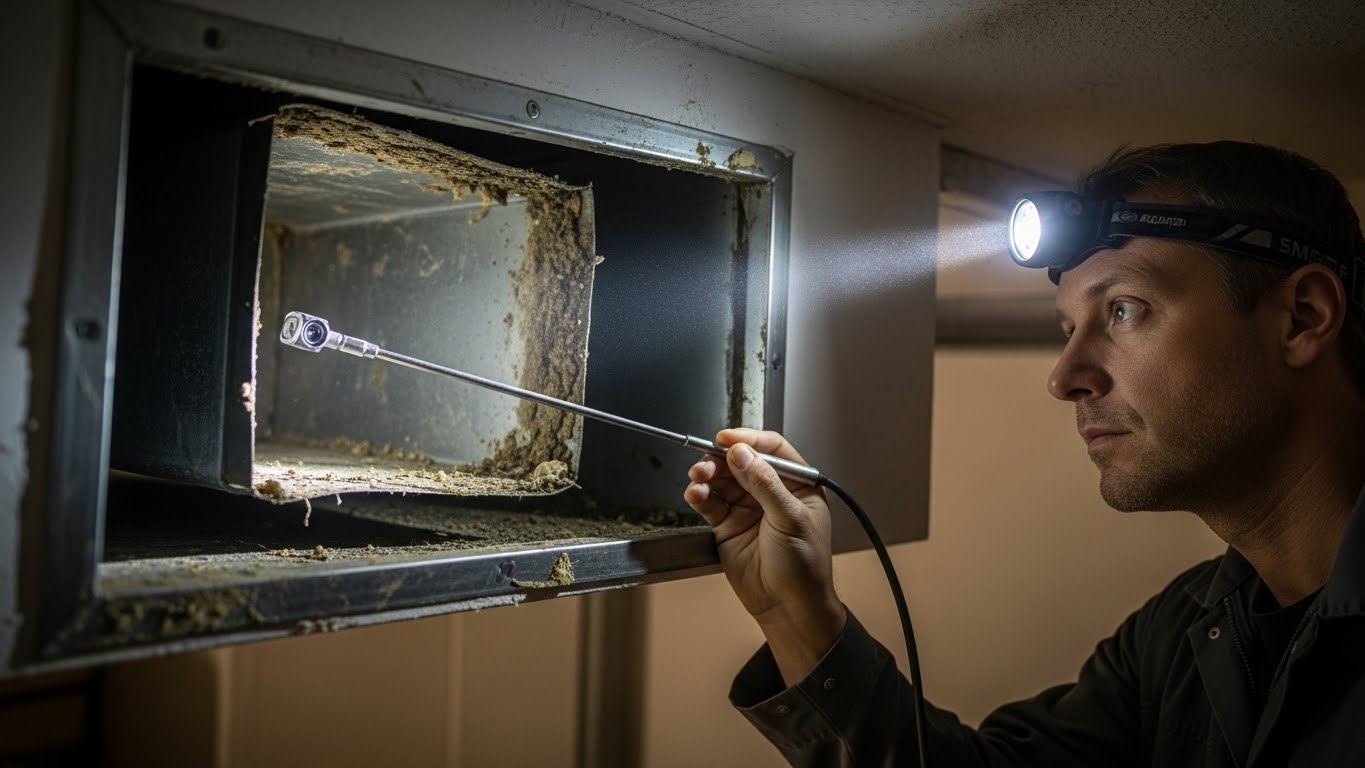
AC duct cleaning removes these contaminants through a systematic process. Technicians begin with a thorough ductwork inspection to assess your system’s current state. They’ll examine the ductwork condition, identifying problem areas like blockages or microbial growth.
The cleaning process typically involves specialized vacuums, brushes, and air whips that dislodge buildup from duct surfaces. Professionals may also sanitize the system to eliminate bacteria and mold spores.
You’ll benefit most from duct cleaning if you’ve noticed musty odors, visible dust around vents, or worsening allergy symptoms.
What Is AC Servicing and What Does It Cover?
AC servicing encompasses a thorough maintenance routine that keeps your cooling system running efficiently. During this preventive maintenance process, technicians inspect, clean, and tune up your unit’s core components.
A standard service visit includes cleaning or replacing air filters, checking refrigerant levels, inspecting electrical connections, and lubricating moving parts. Technicians also examine the condenser and evaporator coils, test thermostat accuracy, and assess overall system performance.
You’ll benefit from professional knowledge that catches small issues before they become costly repairs. Regular servicing extends your unit’s lifespan, reduces energy consumption, and maintains ideal cooling performance.
Unlike duct cleaning, which focuses solely on your ventilation system, AC servicing addresses the mechanical and electrical components that power your entire cooling operation.
Key Differences Between Duct Cleaning and AC Servicing
While both services improve your cooling system’s performance, they target completely different parts of your HVAC setup. AC servicing focuses on the unit itself—checking refrigerant levels, cleaning coils, and ensuring mechanical components run smoothly. Duct cleaning addresses the air pathways throughout your home, removing accumulated dust, allergens, and debris.
Duct maintenance considerations include the age of your system, visible mold growth, and unexplained respiratory issues among household members. You’ll typically need duct cleaning every three to five years, while AC servicing should occur annually.
The energy consumption impact differs greatly between services. Clean ducts allow unrestricted airflow, reducing strain on your system. Regular AC servicing maintains superb refrigerant levels and component efficiency. Together, they maximize your system’s performance and minimize utility costs.
Signs Your Air Ducts Need Professional Cleaning
You’ll know it’s time to call in professionals when you spot visible mold growth or excessive dust buildup around your vents and registers. Unusual musty or stale odors coming from your air ducts are another clear warning sign that shouldn’t be ignored. These indicators suggest contaminants have accumulated to levels that affect your indoor air quality and require expert attention.
Visible Mold or Dust
Visible mold growth or excessive dust accumulation around your vents serves as one of the clearest warning signs that your air ducts need professional attention. When you notice dark spots or fuzzy patches near your registers, you should schedule a visible mold inspection immediately. Mold spores circulating through your home can trigger allergies and respiratory issues.
Dust accumulation monitoring helps you track whether your system’s contamination levels are worsening. If you’re constantly wiping dust from surfaces despite regular cleaning, your ducts are likely distributing particles throughout your living space. Check your vent covers regularly—if they’re coated with grime or you see debris floating from them when the system runs, it’s time to call a professional. Don’t ignore these visual cues; they indicate compromised air quality.
Unusual Odors Present
Strange smells emanating from your vents often signal hidden problems within your ductwork that require immediate attention. When you notice unusual odors present in your home, your HVAC system is likely circulating contaminated air throughout your living space.
Foul odor detection helps you identify the source and urgency of the problem:
| Odor Type | Likely Cause |
|---|---|
| Musty, damp smell | Mold or mildew growth |
| Burning scent | Dust buildup on components |
| Rotten egg odor | Dead pests in ductwork |
| Stale, dusty smell | Accumulated debris |
You shouldn’t ignore these warning signs. Each odor indicates specific contaminants that professional duct cleaning can eliminate. Acting quickly prevents further air quality degradation and protects your family’s respiratory health.
Warning Signals That Your AC Unit Requires Servicing
Your air conditioning system often communicates problems before a complete breakdown occurs. Recognizing these warning signals helps you determine whether you need short term repairs or long term solutions.
Watch for these key indicators that servicing is necessary:
Performance Issues
- Weak airflow from vents
- Inconsistent temperatures throughout rooms
- System cycling on and off frequently
Mechanical Concerns
- Grinding, squealing, or banging noises
- Water leaking around the unit
- Ice forming on refrigerant lines
Efficiency Problems
- Unexplained spikes in energy bills
- Unit running constantly without reaching set temperature
- Humidity levels remaining high indoors
Don’t ignore these signals. What starts as a minor issue requiring short term repairs can escalate into major failures demanding costly long term solutions. Schedule professional servicing when you notice any combination of these warning signs.
How Often Should You Schedule Each Service?
You’ll want to schedule professional duct cleaning every three to five years, though homes with pets, allergies, or smokers may benefit from more frequent cleanings. Your AC unit, on the other hand, needs servicing at least once a year—ideally before the cooling season begins. Following these maintenance schedules helps you catch problems early and keeps your system running at peak efficiency.
Duct Cleaning Frequency Guidelines
Most HVAC professionals recommend scheduling duct cleaning every three to five years for typical households. However, your specific timeline depends on several factors, including pets, allergies, and home renovation activities.
| Household Condition | Recommended Cleaning Frequency |
|---|---|
| Standard home, no pets | Every 4-5 years |
| Pets or allergy sufferers | Every 2-3 years |
| Recent renovation work | Immediately after completion |
| Visible mold or pests | Immediately upon uncovering |
When technicians inspect your system, they’ll also assess whether you need duct replacement guidelines followed or duct sealing techniques applied. Damaged or leaky ducts often require attention before cleaning proves effective.
You should also schedule cleaning after moving into a new home, since you don’t know the previous owner’s maintenance habits. Watch for warning signs like musty odors or inconsistent airflow between rooms.
AC Servicing Schedule Recommendations
While duct cleaning follows a multi-year timeline, AC servicing demands more frequent attention to keep your system running efficiently. You should schedule professional AC maintenance at least twice yearly—once before summer and once before winter. This guarantees your system handles peak demand without unexpected breakdowns.
During each visit, technicians perform a thorough system performance assessment, checking refrigerant levels, electrical connections, and component wear. If you have an older unit or run your AC heavily, consider quarterly check-ups for cost effective maintenance that prevents expensive repairs.
Don’t wait for problems to appear. Regular servicing catches small issues before they escalate, extends your equipment’s lifespan, and maintains ideal energy efficiency. Mark your calendar now—your AC’s health depends on consistent, proactive care.
Cost Comparison: Duct Cleaning Vs AC Servicing
When budgeting for your HVAC maintenance, you’ll find significant differences between duct cleaning and AC servicing costs. Professional duct cleaning typically ranges from $300 to $500 for an average home, while standard AC servicing costs between $75 and $200 per visit.
Your budget considerations should account for frequency differences. You’ll need AC servicing one to two times annually, whereas duct cleaning is only necessary every three to five years. This makes annual AC maintenance more predictable for your budget.
Both services affect your energy consumption impact differently. Clean ducts improve airflow efficiency, while properly serviced units operate at peak performance. Neglecting either service can increase your energy bills by 15-25%, ultimately costing you more than the maintenance itself.
Health and Air Quality Benefits of Clean Ducts
Beyond the financial savings you’ll gain from regular maintenance, clean air ducts deliver substantial health benefits that directly impact your daily well-being. When you remove accumulated dust, allergens, and contaminants from your ductwork, you’re actively improving your indoor air quality.
| Health Concern | How Clean Ducts Help |
|---|---|
| Allergies | Reduces airborne allergens circulating through your home |
| Respiratory Issues | Eliminates dust and mold spores that trigger breathing problems |
| Headaches | Decreases exposure to pollutants causing discomfort |
| Sleep Quality | Provides cleaner air for better rest |
You’ll notice fewer allergy symptoms and respiratory irritations once your ducts are properly cleaned. The health benefits extend to everyone in your household, especially children and elderly family members with sensitive respiratory systems.
Energy Efficiency Gains From Regular AC Maintenance
Regular AC maintenance directly impacts your system’s energy consumption, making it one of the most effective ways to lower your monthly utility bills.
When your AC operates with dirty filters, clogged coils, or low refrigerant levels, it works harder to cool your home. This strain translates to higher electricity usage and increased costs. Studies show that well-maintained systems deliver energy savings of 15-25% compared to neglected units.
You’ll notice improved performance immediately after professional servicing. Your system cycles more efficiently, reaches desired temperatures faster, and maintains consistent cooling throughout your space. Clean components reduce friction and resistance, allowing the compressor and fan motors to operate at ideal levels.
These efficiency gains compound over time, protecting your investment while keeping your home comfortable without wasting energy or money.
Making the Right Choice for Your Cooling System Needs
Understanding the difference between AC duct cleaning and AC servicing helps you make informed decisions about your cooling system’s care. Consider your specific circumstances when choosing between these services.
If you’re experiencing weak airflow, unusual odors, or visible dust accumulation, duct cleaning addresses these air quality considerations directly. However, if your system runs inefficiently, makes strange noises, or fails to cool properly, servicing tackles mechanical issues.
Environmental factors also influence your decision. Homes in dusty areas, near construction sites, or with pets benefit from more frequent duct cleaning. Systems operating in extreme climates require regular servicing to handle increased workloads.
For ideal results, schedule annual AC servicing and duct cleaning every three to five years. This balanced approach keeps your system running efficiently.
Frequently Asked Questions
Can I Clean My AC Ducts Myself Without Hiring a Professional?
You can try DIY duct cleaning methods like vacuuming vents and replacing filters, but you won’t reach deep contaminants. Professional duct cleaning benefits include specialized equipment and thorough removal of mold, dust, and allergens you can’t access yourself.
Does AC Duct Cleaning Void My Air Conditioner’s Warranty?
Professional duct cleaning typically won’t void your warranty. However, you’ll want to check your warranty coverage implications carefully and document any maintenance schedule adjustments. Using certified technicians protects you from potential warranty disputes.
How Long Does a Typical AC Duct Cleaning Appointment Take?
The average duct cleaning duration ranges from 2-4 hours for most homes. Your typical duct cleaning timeframe depends on your system’s size, accessibility, and contamination level. Larger homes with more vents take longer to complete.
Should I Leave My Home During AC Duct Cleaning Service?
You don’t need to leave, but it’s your choice. Technicians maintain proper ventilation throughout the process and minimize dust circulation using specialized equipment. However, if you’re sensitive to dust or noise, stepping out helps.
Can Dirty Ducts Cause My AC Unit to Break Down Faster?
Yes, dirty ducts can shorten your AC unit’s lifespan. When debris accumulates, you’ll experience reduced cooling efficiency, forcing your system to work harder. This leads to increased energy consumption and accelerates wear on essential components.
Conclusion
You don’t have to choose between duct cleaning and AC servicing—they’re complementary services that address different aspects of your cooling system. Schedule AC servicing annually to keep your unit running efficiently, and plan duct cleaning every 3-5 years to maintain healthy air quality. By staying proactive with both services, you’ll extend your system’s lifespan, lower energy bills, and breathe easier in your home.

