
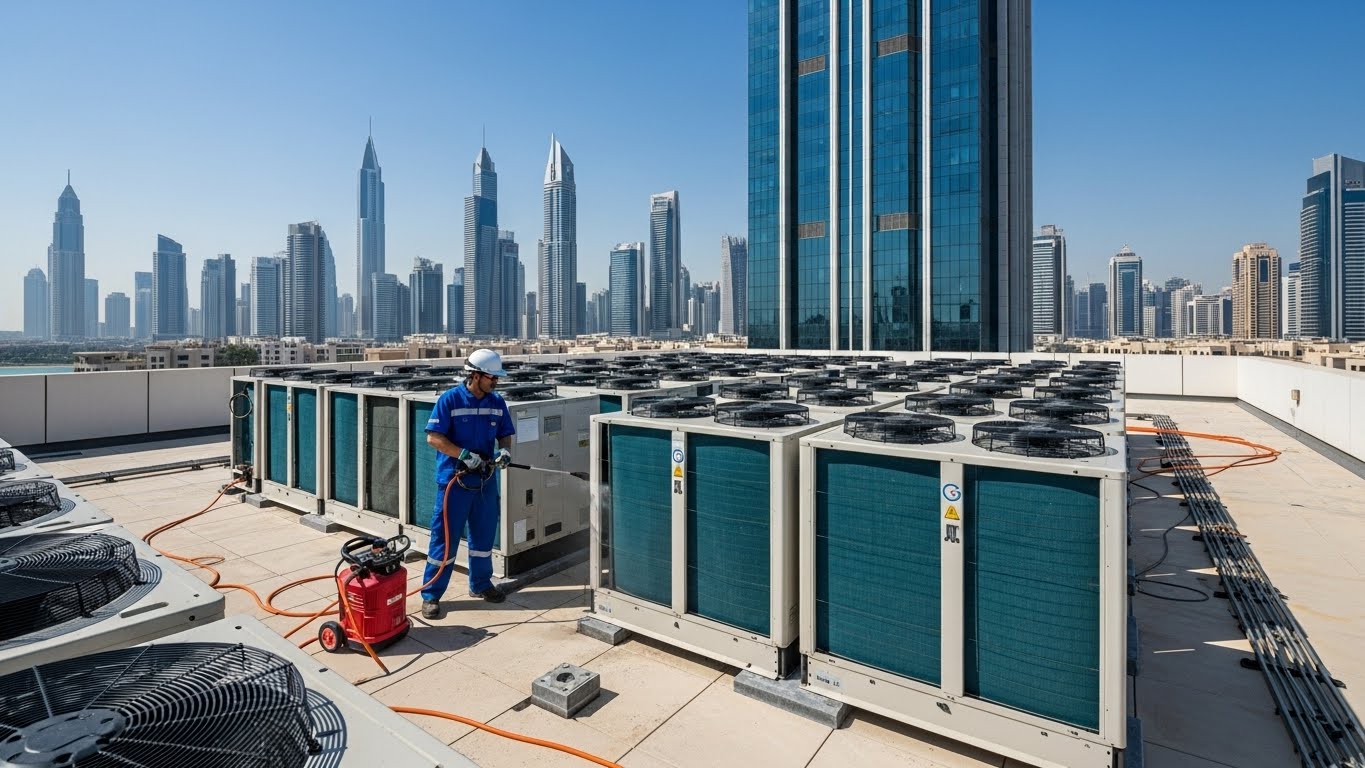
Filthy ductwork in your VRF system could be silently draining thousands from your budget discover what most property managers miss.
If you’re managing a commercial property with a VRF or VRV system, you already know these advanced HVAC setups deliver exceptional climate control. But here’s what many property managers overlook: the ductwork connecting those sleek indoor units can quietly sabotage your entire investment. Dirty ducts don’t just affect air quality—they compromise the very efficiency that made these systems worth installing. What you don’t see inside those ducts might be costing you more than you realize.
Key Takeaways
- VRF and VRV systems use compact duct networks connected to individual indoor units, requiring zone-specific cleaning approaches unlike traditional HVAC systems.
- Signs indicating duct cleaning is needed include visible mold, debris buildup, reduced airflow, musty odors, and increased energy consumption.
- Contaminated ducts pose health risks from mold spores, bacteria, and allergens while creating liability concerns for commercial property managers.
- Dirty ducts can increase energy bills by 20-40% and cause premature wear on fans, motors, and control boards.
- Specialized equipment including compact rotary brushes, flexible cameras, and HEPA-filtered air scrubbers is essential for effective VRF duct cleaning.
Understanding VRF and VRV System Architecture and Ductwork Design
When you’re managing a commercial property with a VRF (Variable Refrigerant Flow) or VRV (Variable Refrigerant Volume) system, understanding the unique design becomes essential for effective maintenance. These systems differ considerably from traditional HVAC setups because they connect multiple indoor units to a single outdoor condensing unit.
Your system components include indoor fan coil units, outdoor units, and refrigerant piping networks. The refrigerant flow characteristics allow precise temperature control across different zones simultaneously. Unlike conventional systems with extensive ductwork, VRF/VRV configurations typically use shorter duct runs connected to individual indoor units.
For a better understanding of how fan coil units are maintained and cleaned, see our guide to FCU cleaning.
You’ll find that each indoor unit requires its own compact duct system, creating multiple access points for cleaning. This distributed layout demands zone-specific maintenance approaches rather than centralized duct cleaning strategies.
Signs Your Commercial VRF or VRV Ducts Need Professional Cleaning
You’ll notice several warning signs when your commercial VRF or VRV system’s ductwork requires professional attention. Visible mold growth or debris accumulation around vents and inside accessible duct sections indicates contamination that’s circulating throughout your building. Reduced airflow performance including uneven temperatures, longer cooling or heating cycles, and increased energy consumption signals that blockages or buildup are restricting your system’s efficiency.
Visible Mold or Debris
Spotting mold growth or debris accumulation around your VRF or VRV system’s vents and registers signals a serious problem that demands immediate attention. Microbiological contamination spreads rapidly through ductwork, compromising indoor air quality and putting occupants at risk. You shouldn’t ignore these warning signs.
| Warning Sign | Health Risk | Action Required |
|---|---|---|
| Black or green patches near vents | Respiratory illness, allergies | Immediate professional inspection |
| Dust buildup on registers | Aggravated asthma, irritation | Schedule duct cleaning |
| Musty odors when system runs | Chronic health issues | Full system evaluation |
When you notice visible contamination, your building’s air distribution system is already affected. Don’t wait for occupant complaints or health issues to escalate. Contact a certified duct cleaning professional to assess and remediate the contamination promptly.
Reduced Airflow Performance
Beyond visible contamination, decreased airflow through your VRF or VRV system often indicates duct obstruction that requires professional cleaning. You’ll notice insufficient airflow when vents that once delivered strong, consistent air now produce weak streams. This reduction forces your system to work harder, increasing energy consumption and accelerating equipment wear.
Uneven temperature distribution across your commercial space serves as another critical warning sign. When some zones feel comfortable while others remain too warm or cold, accumulated debris is likely blocking proper air circulation. You might also hear your system cycling more frequently as it struggles to maintain set temperatures.
Don’t ignore these performance issues. Addressing duct obstructions promptly protects your VRF or VRV investment and restores ideal climate control throughout your facility.
Health and Safety Risks of Neglected Ductwork in Multi-Zone Systems
Neglected ductwork in VRF and VRV multi-zone systems creates serious health and safety hazards that property managers can’t afford to ignore. When contaminants accumulate in your duct network, they circulate throughout multiple zones, exposing occupants to poor indoor air quality that triggers asthma and allergies.
If you want to understand more about the relationship between contaminated air conditioning systems and health concerns, read our guide on whether a dirty AC can make you sick.
The interconnected nature of multi-zone systems means contamination spreads rapidly across your entire facility. Key health risks include:
- Mold growth that releases spores into occupied spaces, causing respiratory infections
- Bacterial contamination from stagnant moisture trapped in ductwork
- Accumulated dust and debris that harbor dust mites and allergens
You’re responsible for maintaining safe conditions for employees, tenants, and visitors. Regular duct cleaning protects occupant health and reduces liability exposure for your commercial property.
How Dirty Ducts Impact VRF and VRV Energy Efficiency and Operating Costs
When dirt and debris accumulate in your VRF and VRV ductwork, they force the system to work harder to maintain desired temperatures across all zones. This increased strain translates directly into higher electricity consumption and accelerated component wear.
Restricted airflow from contaminated ducts creates significant energy losses throughout your system. Your compressors cycle more frequently, refrigerant flow becomes less efficient, and individual zone controllers struggle to regulate temperatures properly. These operational inefficiencies can increase your energy bills by 20-40% compared to systems with clean ductwork.
Beyond immediate utility costs, dirty ducts shorten equipment lifespan and trigger more frequent repairs. You’ll face premature replacement of fans, motors, and control boards. Regular duct cleaning protects your investment while keeping operating costs predictable and manageable across your commercial property.
For a broader look at the financial considerations involved in professional duct cleaning, see our guide to AC duct cleaning costs.
Specialized Equipment Required for VRF and VRV Duct Cleaning
Cleaning VRF and VRV ductwork requires three categories of specialized equipment that differ considerably from standard HVAC cleaning tools.
- Compact rotary brushes and flexible inspection cameras – VRF systems feature smaller diameter ducts and specialized ductwork modifications that standard equipment can’t traverse effectively.
- Variable-speed portable vacuum systems – These units generate precise negative pressure without damaging the system’s sensitive components or refrigerant lines.
- HEPA-filtered air scrubbers – You’ll need advanced cleaning equipment that captures ultrafine particles while protecting indoor air quality during the cleaning process.
You should verify that your cleaning contractor possesses equipment specifically designed for mini-split and variable refrigerant systems. Generic tools can damage ductwork connections and compromise system integrity.
Step-by-Step Commercial Duct Cleaning Process for Variable Refrigerant Systems
A systematic approach to VRF and VRV duct cleaning breaks down into five distinct phases that protect your equipment while maximizing contaminant removal. You’ll need to address refrigerant management considerations before beginning any work near indoor units.
| Phase | Action | Critical Checkpoint |
|---|---|---|
| 1 | System isolation | Verify refrigerant lines sealed |
| 2 | Access point creation | Map duct configuration options |
| 3 | Negative pressure setup | Confirm airflow direction |
| 4 | Mechanical agitation | Monitor debris collection |
| 5 | Final inspection | Document cleanliness levels |
Your technicians should seal each indoor unit’s connection point to prevent contamination from entering the refrigerant circuit. Different duct configuration options require adjusted cleaning sequences, particularly in systems with multiple branch connections serving various zones throughout your commercial space.
For a closer look at what a professional duct cleaning service generally includes, see what’s included in AC duct cleaning.
Recommended Cleaning Frequencies for Different Commercial Property Types
Because VRF and VRV systems operate under varying load conditions across different commercial environments, you can’t apply a one-size-fits-all cleaning schedule to every property type.
Your recommended service intervals depend on specific air quality considerations unique to each facility:
- Healthcare facilities and laboratories – Clean ducts every 6-12 months due to strict contamination control requirements and sensitive patient populations.
- Restaurants and commercial kitchens – Schedule cleaning every 12-18 months since grease particles and food odors accumulate rapidly in ductwork.
- Office buildings and retail spaces – Maintain ducts every 2-3 years under normal operating conditions with standard occupancy levels.
You should adjust these timelines based on local pollution levels, building age, and occupant density. Regular inspections between scheduled cleanings help you identify problems before they compromise system performance.
Choosing a Qualified Duct Cleaning Contractor for Advanced HVAC Systems
When you’re ready to hire a duct cleaning contractor for your VRF or VRV system, you’ll need to verify they possess specific proficiency that goes beyond standard HVAC cleaning credentials. Look for contractors with documented experience in HVAC system integration, particularly those who understand how variable refrigerant systems communicate between indoor and outdoor units.
Ask potential contractors about their familiarity with your specific ductwork configuration. They should explain their cleaning approach without disrupting refrigerant lines or damaging electronic controls. Request references from commercial clients with similar systems.
Confirm the contractor holds NADCA certification and carries appropriate liability insurance. They should provide a detailed scope of work, including pre-cleaning inspections and post-cleaning verification. Don’t hesitate to request proof of manufacturer-specific training for your VRF or VRV brand.
Before selecting a provider, you can also review our guide on how to choose an AC duct cleaning company.
Cost Factors and Budgeting for VRF and VRV Duct Maintenance
When budgeting for VRF and VRV duct maintenance, you’ll need to account for specialized labor and equipment costs that often exceed those of conventional HVAC systems. Your maintenance frequency directly impacts annual expenses, so you should establish a cleaning schedule that balances system performance with cost efficiency. Additionally, your system’s size and the number of indoor units will greatly/substantially/considerably influence your overall maintenance budget.
Labor and Equipment Costs
Labor and equipment costs typically account for 60-70% of your total VRF and VRV duct cleaning budget. Understanding these expenses helps you plan effectively and avoid unexpected charges.
Your labor rates will vary based on technician proficiency, geographic location, and project complexity. Equipment depreciation also factors into service pricing, as contractors must recoup investments in specialized tools.
Consider these primary cost drivers:
- Technician hourly rates – Certified VRF specialists command higher wages than general HVAC technicians, ranging from $75-150 per hour.
- Specialized equipment rental – Robotic cameras, negative air machines, and zone-specific tools add $200-500 daily.
- Travel and mobilization fees – Multi-story buildings or remote locations increase crew deployment expenses.
Request itemized quotes to compare vendors accurately.
Maintenance Frequency Considerations
Although labor and equipment represent the largest expense categories, your cleaning schedule frequency directly impacts long-term maintenance budgets. Several influencing factors determine how often you’ll need professional cleaning services.
| Frequency Level | Building Type | Annual Cleanings |
|---|---|---|
| High | Healthcare facilities | 3-4 |
| Medium | Office buildings | 2-3 |
| Low | Retail spaces | 1-2 |
Seasonal considerations play a significant role in scheduling decisions. You’ll want to plan major cleanings before peak heating and cooling periods when systems work hardest. Buildings with high occupancy or those in dusty environments require more frequent attention.
Spreading cleanings throughout the year helps you avoid budget spikes while maintaining ideal system performance. This proactive approach reduces emergency service calls and extends equipment lifespan.
System Size Impacts Budget
Because VRF and VRV systems vary dramatically in capacity and complexity, your system’s size stands as one of the most significant cost determinants for duct maintenance. Larger system capacity means more ductwork, additional zones, and increased labor hours.
Consider these key size-related cost factors:
- Square footage coverage – Systems serving 50,000+ square feet require substantially more cleaning time than those covering smaller spaces
- Number of indoor units – Each connected unit adds inspection points and duct connections to your maintenance schedule
- Zone complexity – Multi-zone configurations demand specialized attention at each branch and damper location
You’ll find that doubling your system capacity doesn’t simply double costs—it often increases them exponentially due to accessibility challenges and equipment requirements in larger commercial installations.
Preventive Measures to Keep Your Commercial Ductwork Clean Between Services
Keeping your VRF and VRV ductwork clean between professional services doesn’t require complex strategies—it demands consistent attention to a few key practices. You’ll want to implement supplemental cleaning techniques that target accessible components like return air grilles and diffusers monthly. Spot cleaning trouble areas where dust accumulates most heavily prevents buildup from migrating deeper into your system.
Replace or clean filters according to manufacturer specifications—typically every one to three months depending on occupancy levels and environmental conditions. You should also seal any gaps around duct connections to prevent contaminant infiltration.
Monitor indoor air quality metrics regularly and address humidity levels to discourage microbial growth. Train your maintenance staff to recognize early warning signs of contamination, including unusual odors or visible debris around vents, so you can intervene before problems escalate.
For additional practical advice, read our guide on tips to maintain air ducts after duct cleaning.
If professional cleaning is required, you can learn more about AC duct cleaning and disinfection services.
Frequently Asked Questions
Can VRF and VRV Duct Cleaning Be Performed During Normal Business Hours?
Yes, you can schedule VRF and VRV duct cleaning during normal business hours. With daytime scheduling options, technicians work efficiently to guarantee minimal disruptions to your daily operations while keeping your system running smoothly.
Will Duct Cleaning Void My VRF or VRV System Warranty?
Professional duct cleaning typically won’t void your warranty coverage when performed by certified technicians. You should check your manufacturer’s guidelines and document all system maintenance to protect your warranty and guarantee compliance with requirements.
How Long Does a Complete VRF Duct Cleaning Service Typically Take?
You’ll typically need 4-8 hours for a complete VRF duct cleaning service, depending on your system’s size. Your technician will perform a thorough duct system inspection and guarantee proper air filtration before completing the job.
For more information about service timelines, see our guide to how long AC duct cleaning takes.
Can Duct Cleaning Fix Uneven Temperatures Between Different Zones?
Yes, duct cleaning can help resolve uneven temperatures by removing air flow restrictions that block proper distribution. You’ll notice improved airflow balancing across zones once debris and buildup aren’t impeding your system’s performance.
Should Indoor Units Be Cleaned at the Same Time as Ductwork?
Yes, you should clean indoor units alongside ductwork. This approach maximizes the importance of regular maintenance and prevents recontamination. You’ll notice the potential impact on indoor air quality enhances considerably when you address both simultaneously.
Conclusion
Your VRF or VRV system represents a significant investment in your commercial property’s comfort and efficiency. By staying proactive with duct cleaning, you’ll protect that investment while ensuring healthy indoor air quality for everyone in your building. Don’t wait for problems to surface—schedule regular inspections, work with qualified contractors, and implement preventive measures. You’ll enjoy lower energy costs, fewer repairs, and a cleaner environment for years to come.

