
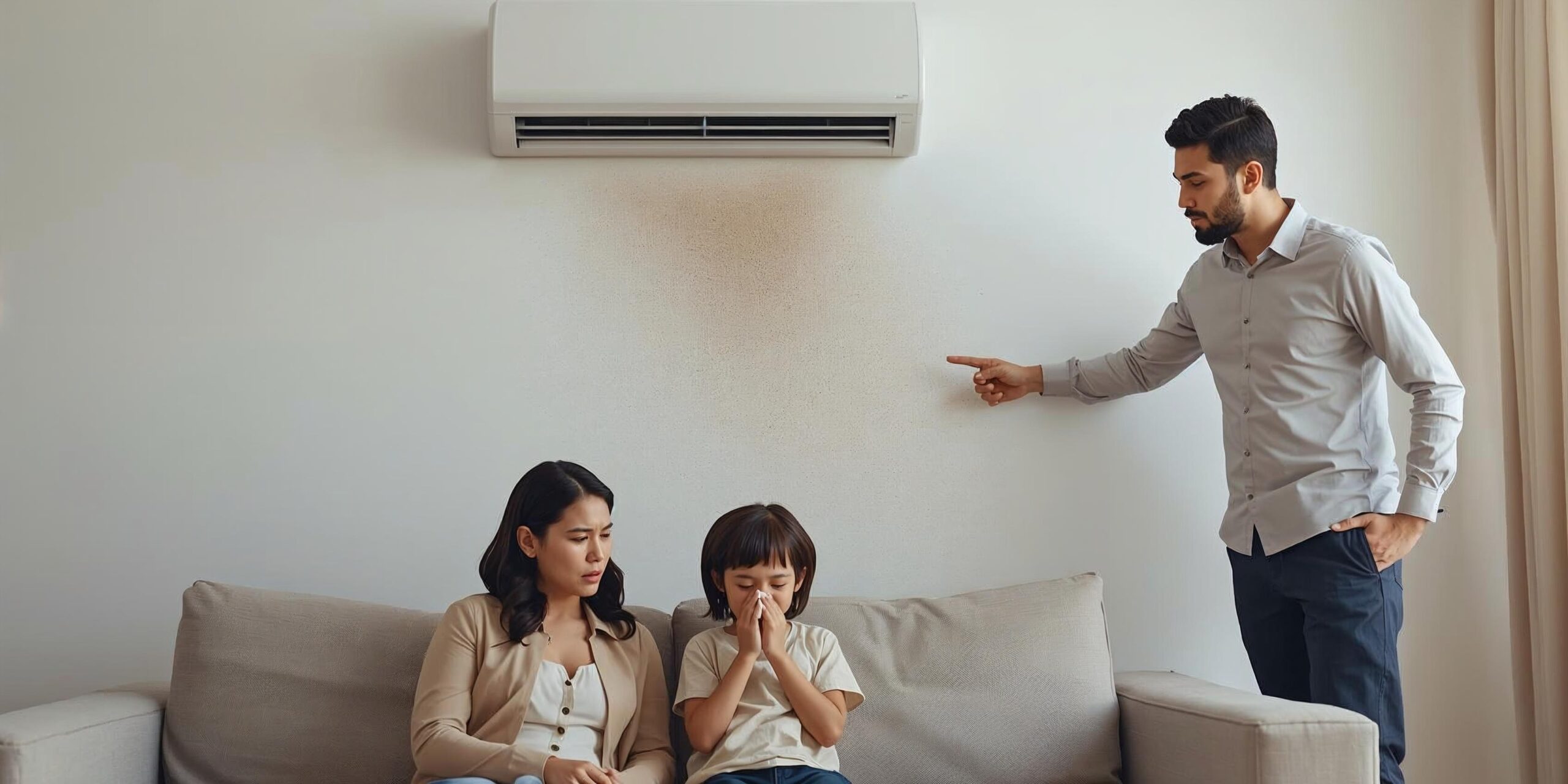
Unclean air conditioners harbor dangerous contaminants that could be silently poisoning your family’s air supply every single day.
You’ve probably never considered your air conditioner as a potential health threat, but that innocent-looking unit quietly humming in the corner might be doing more harm than good. When your AC system isn’t properly maintained, it becomes a breeding ground for dust, mold, bacteria, and other contaminants that circulate throughout your home with every breath you take. The symptoms you’re experiencing, such as persistent coughing, unexplained fatigue, or recurring headaches, could be directly linked to what’s lurking inside your neglected system.
Respiratory Problems and Allergic Reactions
When your AC system lacks proper maintenance, it transforms from a comfort provider into a potential health hazard that can trigger serious respiratory problems and allergic reactions. Dust, pollen, and allergens accumulate in neglected air conditioners, circulating through your home and causing coughing, wheezing, and breathing problems. These contaminants severely compromise indoor air quality, making symptoms worse the longer you’re exposed.
Poorly maintained systems become breeding grounds for bacteria and fungi, creating dangerous mold growth that releases airborne microorganisms. These pathogens can cause infectious pneumonia or even Legionnaires’ disease. You’ll notice throat irritation, congestion, and difficulty breathing that improves only after leaving the contaminated space.
If you have asthma or COPD, you’re at higher risk for severe complications. Regular maintenance prevents these health hazards.
For more information about keeping your AC system clean and maintaining healthier indoor air, see our guide to AC sanitisation and clean indoor air.
Sick Building Syndrome Symptoms
After spending hours in an air-conditioned building, you might experience a cluster of mysterious symptoms known as sick building syndrome that can’t be traced to any specific illness or cause. You’ll likely notice headaches, dizziness, congestion, cough, skin irritation, and persistent tiredness that worsen the longer you stay indoors. These symptoms disappear once you leave the building, indicating poor indoor air quality from your air conditioning system.
Without proper air conditioning maintenance and regular air filter replacements, your system becomes a breeding ground for harmful contaminants. Malfunctioning units release allergens, toxic chemicals, and dangerous bacteria like Legionella pneumophila, which causes life-threatening Legionnaires’ disease. This compromised environment directly threatens your respiratory health, making you more vulnerable to infections and allergic reactions.
If headaches are one of the symptoms you are experiencing around air conditioning, you can also read about whether air conditioning can cause headaches.
Mold Growth and Fungal Infections
Since your AC system operates in consistently moist conditions, it becomes a perfect breeding ground for mold and fungi that’ll directly impact your health. When neglected, your system circulates mold spores throughout your home, severely compromising indoor air quality. You’ll experience respiratory issues including nasal congestion, throat irritation, and potentially serious infections like bronchitis or pneumonia.
If you have asthma, mold exposure worsens your condition, triggering more frequent attacks and breathing difficulties. Older adults, young children, and anyone with compromised immune systems face heightened risks of severe fungal infections from contaminated air in air-conditioned buildings.
Regular air conditioning maintenance prevents dangerous mold growth. You must clean and service your system consistently to minimize health risks and protect your family from mold-related illnesses.
Professional AC duct cleaning and disinfection can help address accumulated dust, debris, and contaminants within accessible ductwork and air distribution areas.
Bacterial Contamination and Legionnaires’ Disease
Your air conditioning system can harbor deadly bacterial pathogens like Legionella pneumophila, which causes the potentially fatal Legionnaires’ disease. When your HVAC system isn’t properly maintained, it creates ideal breeding conditions for these dangerous bacteria. Legionnaires’ disease produces pneumonia-like symptoms including severe cough, shortness of breath, and high fever, often requiring immediate hospitalization.
Studies reveal that air conditioning workers exposed to contaminated systems suffer from increased allergies and reduced lung function compared to unexposed individuals. The bacteria multiply in stagnant water within poorly maintained units, then spread throughout your indoor environment via air circulation.
Regular maintenance and proper sanitization of your air conditioning system are essential for preventing Legionella contamination. Don’t let your HVAC become a breeding ground for bacterial pathogens that threaten your health.
You can learn more about the role of professional air duct sanitising and disinfecting in maintaining cleaner air distribution systems in our guide to air duct sanitising and disinfecting.
Asthma Aggravation and Breathing Difficulties
When your air conditioning system becomes contaminated with dust, pollen, and other airborne particles, it changes from a comfort device into an asthma trigger that can make breathing a daily struggle. Your dirty air conditioner circulates these allergens throughout your home, creating poor indoor air quality that directly impacts your respiratory health.
Clogged filters in your air conditioning unit release contaminants that trigger asthma attacks, causing chest tightness and breathing difficulties. Research confirms that people with asthma experience more frequent attacks when exposed to polluted air from malfunctioning systems.
Regular HVAC maintenance is essential for protecting your breathing or respiratory wellness. Clean your filters monthly and schedule professional servicing to maintain proper ventilation and humidity control, reducing your asthma attack risk considerably.
For additional maintenance guidance, see these optimal AC maintenance tips.
Headaches, Fatigue, and Concentration Issues
Beyond respiratory problems, contaminated air conditioning systems assault your cognitive abilities by flooding your indoor environment with volatile organic compounds, carbon monoxide, and accumulated toxins. When your AC units circulate these pollutants, you’ll experience persistent headaches, unexplained fatigue, and difficulty concentrating on work or daily tasks. Studies confirm that students without proper air conditioning perform significantly worse on cognitive tests during hot months, demonstrating how essential clean air is for mental performance.
Dirty filters and neglected systems trap allergens and contaminants that directly impact your brain function. These accumulated toxins create a cycle where your health deteriorates while your productivity plummets. However, you can break this pattern through regular cleaning and maintenance. By keeping your air conditioning system properly serviced, you’ll maintain a healthier indoor environment and protect your cognitive abilities from these hidden dangers.
If you are noticing headaches specifically when your AC is running, our article on air conditioning and headaches provides more information on the topic.
Skin and Eye Irritation From Poor Air Quality
Although respiratory and cognitive symptoms grab attention first, dirty air conditioning systems simultaneously attack your body’s most exposed surfaces. Your skin and eyes bear the brunt of poor indoor air quality through multiple pathways.
Poorly maintained air conditioning creates dry air that strips moisture from your skin, causing irritation, itchiness, and dehydration. Your eyes suffer similarly, becoming dry and potentially experiencing blurred vision from constant exposure to this arid environment.
Mould growth within AC units releases spores that trigger skin rashes and allergic reactions when they contact your body. Meanwhile, allergens and dust circulating through contaminated systems cause inflammation and irritation.
Volatile organic compounds accumulating in malfunctioning air conditioning systems create chemical exposure that irritates both skin and eyes, causing discomfort and inflammatory responses throughout your body’s external surfaces.
Prevention Through Proper AC Maintenance
Understanding these health risks highlights why upholding your air conditioning system properly can protect you from illness. Regular AC maintenance prevents harmful contaminants from circulating through your home. You should replace your air filters every one to three months, depending on usage and air quality conditions.
Professional AC cleaning services can deep-clean components you can’t reach, including evaporator coils and ductwork. When your AC unit shows signs of poor performance or unusual odors, don’t delay AC repair. Replace your AC system entirely if it’s over fifteen years old or requires frequent repairs.
Schedule annual inspections with qualified technicians who’ll identify potential problems before they affect your health. Proper maintenance guarantees clean air circulation and prevents the bacterial growth that makes you sick.
For homeowners looking to keep their air ducts in better condition after professional cleaning, see these tips to maintain air ducts after duct cleaning.
Frequently Asked Questions
What Are the Symptoms of Air Conditioning Sickness?
You’ll experience headaches, dizziness, congestion, and cough from air quality issues and allergen exposure. Mold growth concerns cause respiratory irritation, while temperature fluctuations and dehydration risks worsen bacterial contamination symptoms, leaving you tired.
Can You Get Sick From a Dirty AC?
Yes, you’ll get sick from dirty ACs. Poor air filter cleanliness, mold growth, dust buildup, and circulated allergens cause respiratory issues. Proper AC maintenance prevents humidity problems and refrigerant leakage concerns affecting your health.
How Do You Treat AC Sickness?
You’ll treat AC sickness by cleaning air filters, maintaining proper temperature settings, monitoring humidity levels, adjusting airflow direction, scheduling regular maintenance, using air purifiers, and addressing ventilation issues to improve your indoor air quality effectively.
How Long Does Air Conditioning Sickness Last?
AC sickness typically lasts hours to days after you leave the contaminated environment. Recovery depends on your filter replacement intervals, vent cleaning schedules, and how well you’ve implemented humidity control methods and airborne allergen mitigation strategies.
Conclusion
You can’t afford to ignore your AC’s condition when it comes to your health. Dirty systems will make you sick through respiratory problems, mold exposure, and bacterial contamination. You’ll experience everything from allergies to serious infections like Legionnaires’ disease. Don’t wait until symptoms appear. You need regular filter changes and professional maintenance now. Your lungs, energy levels, and overall well-being depend on the air you’re breathing every day.

