
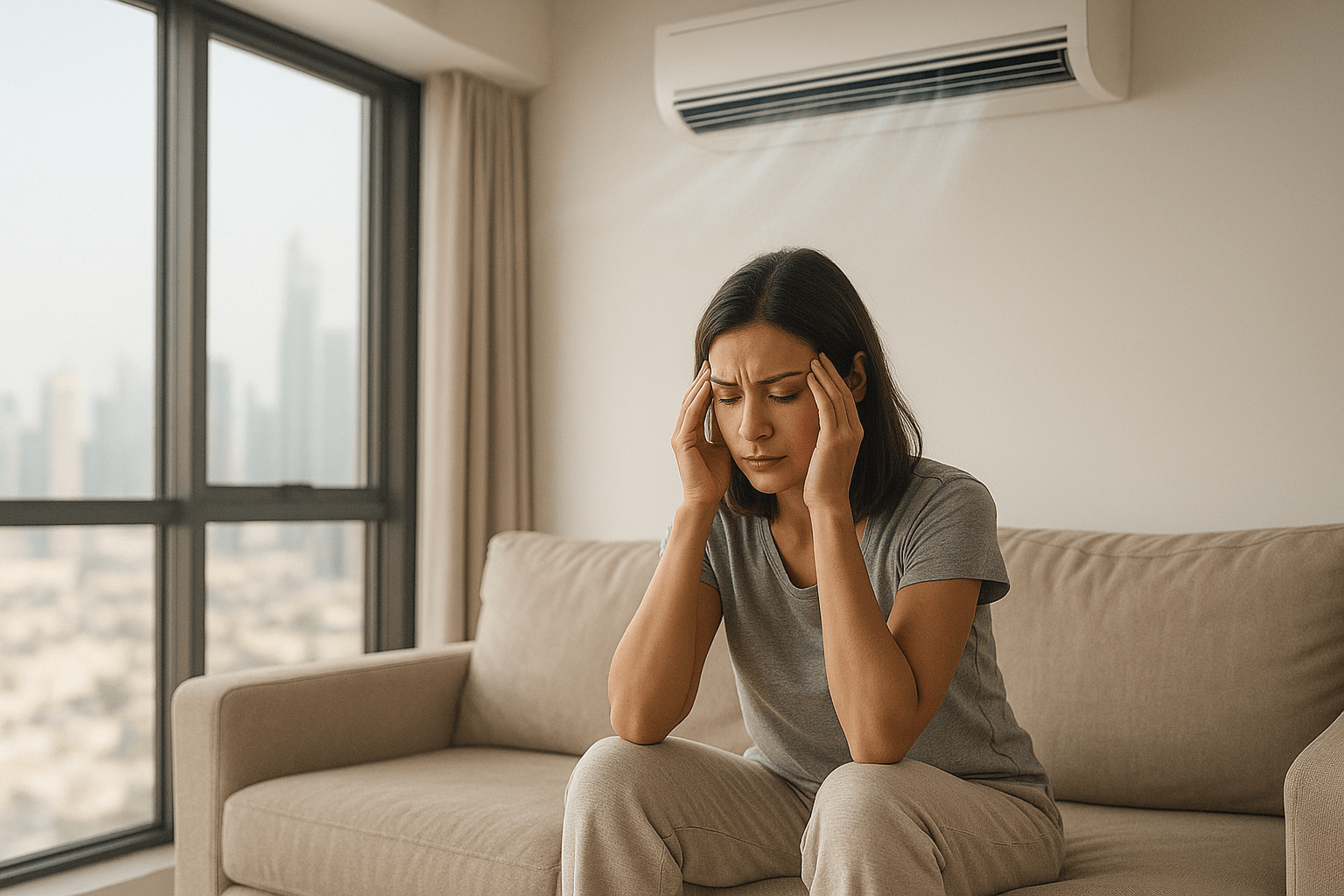
Poor indoor air quality and temperature shifts from AC systems can trigger headaches through several physiological pathways.
You’ve likely experienced that nagging headache after spending hours in an air-conditioned environment, but you might not realize the complex physiological mechanisms at work. Your body’s response to AC involves multiple interconnected pathways, from trigeminal nerve stimulation triggered by temperature fluctuations to dehydration caused by reduced humidity levels. Understanding these connections between environmental controls and neurological responses can help you identify whether your cooling system may be contributing to your discomfort.
Key Takeaways
- Air conditioning can trigger headaches through rapid temperature changes that cause blood vessel constriction and reduced cerebral blood flow.
- Reduced humidity from AC systems can contribute to dehydration of mucous membranes and increased water loss, which may contribute to headache development.
- Poor air quality from circulating allergens, dust, and chemical irritants can cause inflammation and trigger headaches in sensitive individuals.
- AC noise can create repetitive environmental stimulation that may contribute to stress responses and headaches.
- Prevention includes maintaining a comfortable indoor temperature, staying hydrated, replacing filters regularly, and improving indoor air quality.
How Air Conditioning Triggers Headaches
When you’re exposed to air conditioning systems, several physiological mechanisms can contribute to headache episodes through distinct pathways. Rapid temperature fluctuations can cause changes in blood vessel diameter in your head and neck, potentially contributing to vascular tension headaches.
The dry air produced by AC units can reduce ambient humidity levels, leading to dryness of mucous membranes and contributing to dehydration-related discomfort.
Additionally, recirculated air can contain allergens, dust particles, and chemical irritants that may contribute to headaches through inflammatory responses. Poor ventilation systems may also allow carbon dioxide and other indoor pollutants to accumulate, potentially contributing to discomfort and tension-type headaches.
The constant noise from AC compressors can also become an environmental stressor, particularly for people who are sensitive to repetitive sounds or other environmental stimuli.
If poor air quality is contributing to your discomfort, keeping the AC system and air distribution components clean is important. You can learn more about air duct sanitising and disinfecting and how it can help maintain cleaner air distribution systems.
Dehydration and Temperature-Related Headache Causes
The physiological mechanisms underlying dehydration-related headaches can become more noticeable in air-conditioned environments where humidity levels are low. When you’re exposed to air conditioning systems for extended periods, dry indoor air can contribute to moisture loss and dryness, particularly when you are not drinking enough fluids.
Temperature-related headaches can also occur when you move rapidly between hot outdoor conditions and significantly colder indoor environments. Sudden exposure to cold air can cause blood vessels to constrict and may stimulate sensitive nerves around the head and face.
Maintaining a comfortable and consistent indoor temperature can help reduce these environmental triggers. You can also reduce the likelihood of dehydration-related discomfort through consistent fluid intake and by avoiding prolonged exposure to excessively dry indoor air.
Poor Air Quality and Airborne Irritants
Beyond physiological responses to temperature and humidity changes, air conditioning systems can distribute contaminated air throughout indoor spaces, introducing allergens, pollutants, and chemical irritants that may contribute to headaches.
Poor indoor air quality can occur when HVAC systems circulate airborne particulates, mold spores from contaminated components, and volatile organic compounds released from building materials. You’re particularly vulnerable if you have allergic sensitivities or other reactions to airborne irritants.
Inadequate ventilation in sealed buildings can allow irritants and pollutants to accumulate and contribute to headache symptoms. Your risk may increase when filtration systems fail to capture airborne contaminants or when maintenance schedules allow dust and microbial buildup on cooling components.
Proper HVAC maintenance, effective filtration, and adequate fresh air exchange can help reduce exposure to headache-triggering airborne irritants.
Regular professional AC duct cleaning and disinfection can also help address accumulated dust and contaminants inside air distribution systems when cleaning is necessary.
Noise and Environmental Factors
How does environmental noise from air conditioning systems contribute to headache development? Poorly maintained AC units can generate intermittent or repetitive noise that may contribute to tension headaches and migraines in people who are sensitive to environmental sounds.
Environmental factors extend beyond acoustic disturbances. Cold air exposure from air conditioning can cause rapid blood vessel constriction or nerve stimulation, resulting in sharp headaches that may improve after temperature conditions return to normal.
AC systems can also circulate airborne particles and microorganisms when filtration and maintenance are inadequate. This can contribute to poor indoor air quality and may increase discomfort for people who are sensitive to airborne irritants.
Your susceptibility to these environmental factors depends on system maintenance, temperature differences, indoor air quality, and individual sensitivity to environmental stressors.
For a broader understanding of how AC systems can affect indoor comfort and air quality, you can also read about the importance of duct cleaning.
Prevention Strategies and Treatment Options
Since air conditioning-related headaches can stem from multiple environmental factors, prevention requires a systematic approach targeting hydration, temperature control, indoor air quality, and maintenance.
You’ll need to maintain adequate fluid intake to prevent dehydration-related headaches, particularly when spending long periods in air-conditioned environments. Set your indoor temperature to a comfortable level and avoid extreme temperature differences between indoor and outdoor environments.
Optimize air quality through regular filter replacement and appropriate air purification to reduce particulate matter and allergens. These contaminants can contribute to inflammatory responses and headache symptoms.
Regular maintenance is equally important. Dust and debris can accumulate inside air conditioning systems and air ducts over time. Keeping these components clean can help maintain better indoor air quality and system performance.
For additional practical advice, see our guide to optimal AC maintenance tips.
If your air ducts have significant dust or contamination buildup, professional duct cleaning may be appropriate. You can learn more about what’s included in AC duct cleaning before arranging a service.
Frequently Asked Questions
Why Does My AC Give Me a Headache?
Your AC may contribute to headaches through rapid temperature changes, dry indoor air, dehydration, poor air circulation, airborne irritants, or environmental noise. Identifying the specific trigger can help you determine which environmental changes may provide relief.
How Do You Get Rid of a Headache From the AC?
You can start by adjusting the thermostat to a comfortable temperature, maintaining suitable indoor humidity, ensuring proper air filter maintenance, staying hydrated, and improving indoor air quality. If headaches continue despite these changes, consider discussing persistent symptoms with a healthcare professional.
Conclusion
You can reduce the likelihood of AC-related headaches by maintaining a comfortable indoor temperature, staying adequately hydrated, and keeping your HVAC system properly maintained. Improving indoor air quality through appropriate filtration, regular filter replacement, and professional duct cleaning when necessary can also help reduce exposure to airborne irritants.
If you’re experiencing persistent headaches despite making environmental changes, seek appropriate medical evaluation to determine whether another underlying cause may be responsible for your symptoms.

